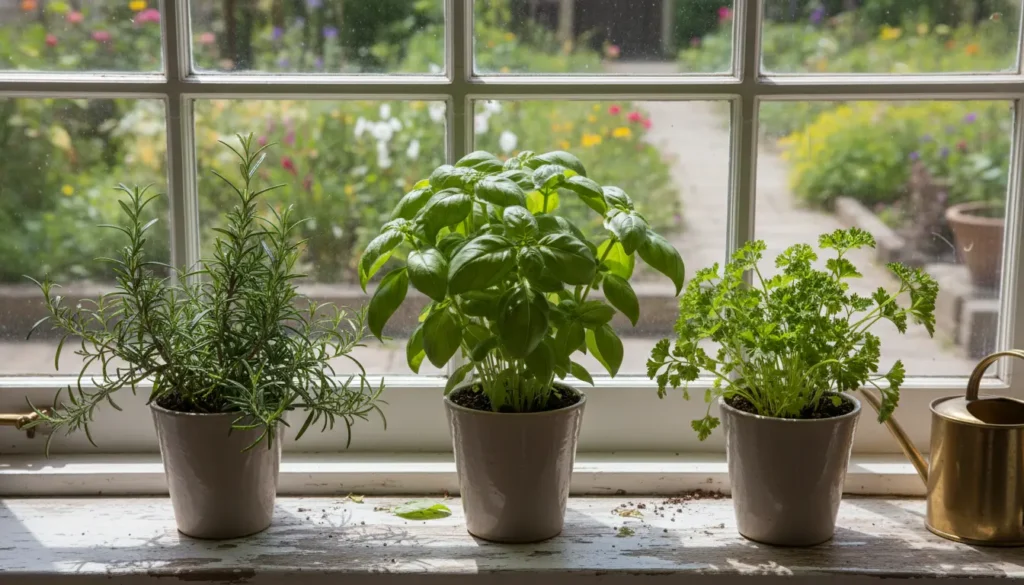
Growing herbs indoors is a low-cost way to add fresh flavor to meals and brighten a kitchen. This guide gives step-by-step, practical advice for indoor herb gardening for beginners.
Indoor Herb Gardening for Beginners: Choosing Your First Herbs
Start with herbs that tolerate indoor conditions and are forgiving for new gardeners. Easy choices include basil, mint, chives, parsley, and thyme.
Pick 2 to 4 varieties for your first setup. That keeps care simple and helps you learn each herb’s needs.
Best Herbs for Indoor Herb Gardening for Beginners
- Basil – loves bright light and regular water.
- Mint – tolerates lower light but prefers moist soil.
- Chives – compact, good for small pots and windowsills.
- Parsley – slower grower but rewarding; needs steady light.
- Thyme – drought-tolerant and easy to maintain.
Light and Location for Indoor Herb Gardening for Beginners
Light is the most important factor. Most culinary herbs need at least 4 to 6 hours of direct or bright indirect light each day.
Place pots on a south- or west-facing windowsill where possible. If natural light is limited, use a simple LED grow light for 10 to 12 hours daily.
Light Tips
- Rotate pots weekly so plants grow evenly.
- Supplement with a clip-on LED light when days are short.
- Avoid drafts from cold windows or vents that dry plants quickly.
Containers, Soil, and Drainage
Choose containers with drainage holes to prevent root rot. A 4-6 inch pot works well for single herbs; use wider pots for multiple plants.
Use a light, well-draining potting mix formulated for containers. Avoid garden soil which compacts and holds too much moisture indoors.
Practical Container Options
- Ceramic or plastic pots with holes and a saucer.
- Herb planters with compartments for different plants.
- Self-watering pots for very busy beginners.
Watering and Feeding
Watering frequency depends on light, pot size, and plant type. Check soil by poking a finger 1 inch deep; water when that layer feels dry.
Feed herbs with a balanced liquid fertilizer at half strength every 4 to 6 weeks during active growth. Overfeeding can reduce flavor and encourage leggy growth.
Watering Checklist
- Water thoroughly until excess drains from the hole.
- Discard standing water from saucers after 30 minutes.
- Reduce watering in winter when growth slows.
Pruning, Harvesting, and Maintenance
Regular pruning keeps herbs productive and prevents legginess. Pinch back tips to encourage bushier growth and remove flowering buds on basil to extend leaf production.
Harvest in the morning when oils are concentrated for best flavor. Use clean scissors and take no more than one third of a plant at a time.
Maintenance Routine
- Weekly check for pests like aphids or spider mites.
- Clean leaves occasionally to remove dust and improve light absorption.
- Repot annually or when roots fill the container.
Many herbs release their strongest aroma after a light misting and being slightly stressed. A short dry period before harvesting can intensify flavor, but avoid letting plants wilt.
Common Problems and Quick Fixes for Indoor Herb Gardening for Beginners
Yellow leaves often mean overwatering or poor drainage. Leggy stems usually indicate low light. Small sticky deposits can signal aphids or scale.
Address problems quickly: adjust watering, move plants to brighter light, and treat pests with insecticidal soap or a stream of water.
Simple Troubleshooting
- Yellow leaves: check drainage and watering habits.
- Leggy growth: increase light and prune back stems.
- Pests: isolate plant and use safe treatments like neem oil.
Quick Real-World Example
Sara, a busy teacher, started indoor herb gardening for beginners with two pots: basil and chives on her east-facing windowsill. She used a 6 inch pot, commercial potting mix, and watered when the top inch of soil dried.
Within 6 weeks she had a steady supply of basil for salads and chives for breakfasts. Small weekly pruning sessions kept plants compact and productive, and she moved a clip-on LED light nearby during a cloudy month.
Final Checklist to Start Today
- Choose 1-3 beginner herbs like basil, mint, or chives.
- Use pots with drainage and a loose potting mix.
- Provide 4-6 hours of bright light or a grow light.
- Water when the top inch of soil is dry and feed lightly monthly.
- Prune regularly and harvest responsibly to encourage growth.
Indoor herb gardening for beginners is accessible, low-risk, and rewarding. Start small, monitor conditions, and adjust as you learn what each herb prefers. With a few simple tools and routines, you can have fresh herbs year-round.