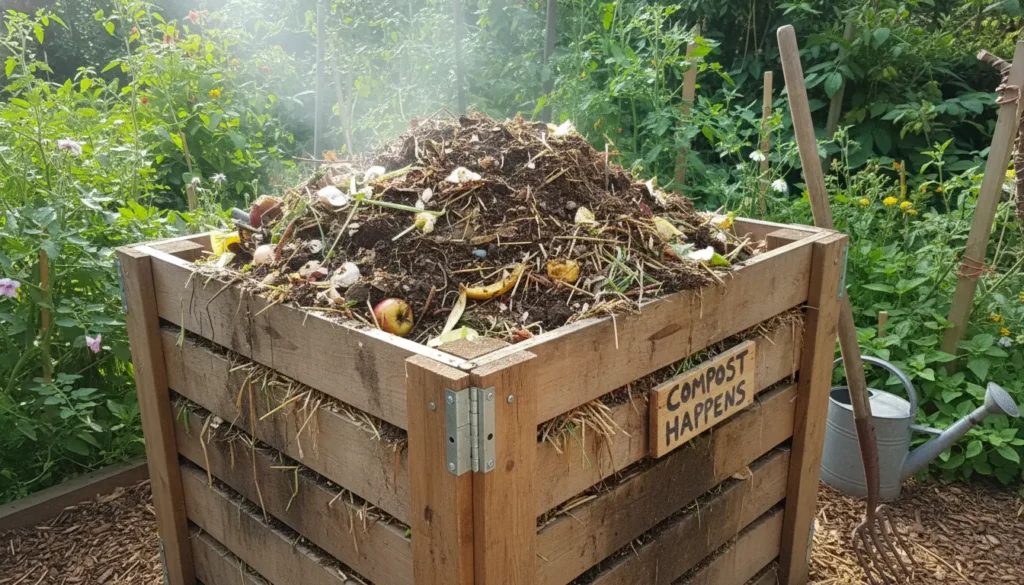
Why Home Composting Matters
Composting at home reduces kitchen and yard waste while creating nutrient-rich soil for plants. It lowers garbage volume and returns organic matter to the soil, improving structure and water retention.
Home composting is simple once you know the basic balance of materials and how to manage moisture and air. This guide explains practical steps you can follow today.
Getting Started with Home Composting
Choose a composting method that fits your space and needs. Common options include backyard piles, tumblers, and indoor systems like bokashi or worm bins.
Consider the volume of waste you generate and the time you want to spend managing the pile when selecting a system.
Materials You Need for Composting at Home
- Bin, tumbler, or a dedicated pile area
- Kitchen scraps (fruit and vegetable peels) and yard waste
- Bulking material such as straw, shredded paper, or dry leaves
- Pitchfork or aeration tool and a watering can
Balance Greens and Browns
Good compost needs a mix of “greens” (nitrogen-rich) and “browns” (carbon-rich). Aim for roughly 1 part greens to 2–3 parts browns by volume.
- Greens: food scraps, fresh grass clippings, coffee grounds
- Browns: dried leaves, cardboard, straw, shredded newspaper
Step-by-Step: How to Start Composting at Home
Follow these steps to set up and maintain a home compost pile that breaks down efficiently.
1. Set Up Your Bin or Pile
Place the bin in a partly shaded area with good drainage. If using a pile, start on soil so worms and microbes can enter.
2. Layer Materials
Begin with a layer of coarse browns to aid airflow. Add alternating layers of greens and browns, keeping layers thin enough to allow decomposition.
3. Maintain Moisture and Air
The pile should be as damp as a wrung-out sponge. Water dry piles and turn or aerate every 1–2 weeks to speed decomposition and prevent odor.
4. Troubleshoot Common Issues
If it smells like ammonia, add more browns and turn the pile. If it is too dry and slow, moisten and add greens. If pests appear, cover food scraps with a layer of brown material and secure the bin.
Tips for Different Living Situations
Apartment or Small Space Composting
Use a worm bin (vermicompost) or bokashi system indoors. Both systems process kitchen scraps without large outdoor space and are low-maintenance.
Backyard Composting
Backyard piles or tumblers work well if you have yard waste. Tumblers speed up mixing and reduce pest access compared to open piles.
Using Finished Compost
Compost is ready when it looks dark, crumbly, and has an earthy smell. Use it as a top dressing for garden beds, mix it into potting soil, or incorporate it into lawn care.
A typical application is to spread a 1–2 inch layer over beds in spring or fall and mix lightly into the topsoil.
Did You Know?
About 30% of household waste is compostable. Turning that waste into compost can cut landfill trash and return nutrients to your soil.
Quick Checklist for Successful Home Composting
- Choose an appropriate bin or method for your space.
- Keep a 1:2 to 1:3 ratio of greens to browns.
- Aerate regularly and maintain moisture like a damp sponge.
- Cover fresh food scraps to deter pests.
- Harvest finished compost when dark and crumbly.
Real-World Case Study: Small Backyard Tumbler
Emma, a homeowner with a small yard, installed a 60-liter tumbler near her vegetable beds. She added kitchen scraps and mixed in shredded cardboard and dry leaves.
By turning the tumbler twice a week and monitoring moisture, Emma produced usable compost in about three months. She applied a thin layer to her raised beds and saw improved soil texture and stronger seedlings the next season.
Safety and What Not to Compost
Avoid meat, dairy, oily foods, and diseased plant material in standard home compost systems. These items can attract pests or introduce pathogens.
Keep pet waste out of garden compost used on food crops; it requires high-temperature composting to be safe.
Final Advice for Home Composting Success
Start small and adjust as you learn what works in your climate and space. Consistent layering, moisture control, and occasional turning are the keys to steady results.
With a few simple habits, composting at home becomes an easy, reliable way to reduce waste and improve your garden soil.