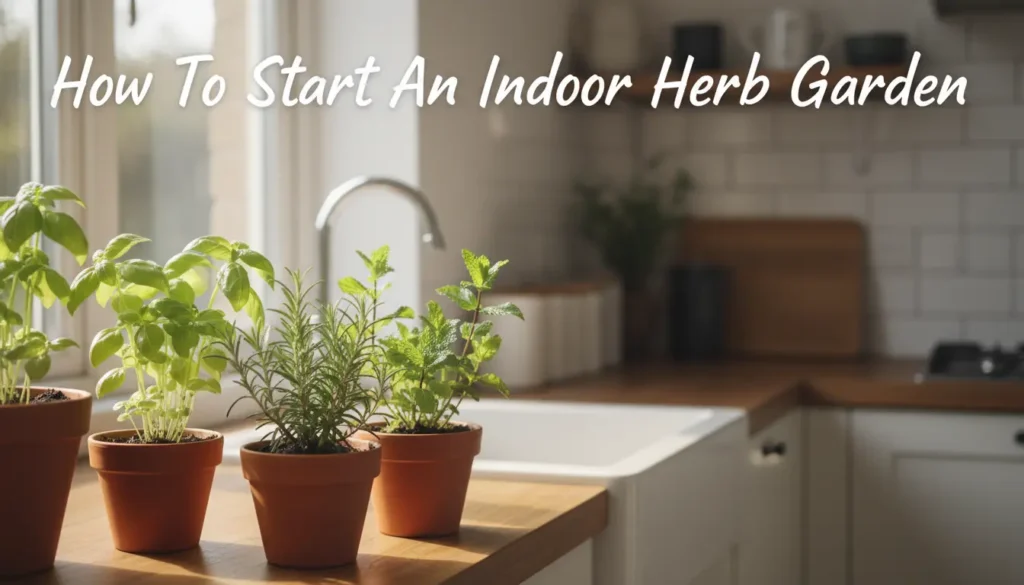
Why Start an Indoor Herb Garden
An indoor herb garden gives fresh flavors, year-round access, and saves money on store-bought herbs. It also fits apartments, small kitchens, and limited outdoor space.
This guide shows step-by-step how to plan, plant, and maintain an indoor herb garden for steady harvests.
Plan Your Indoor Herb Garden: Space and Light
Decide where to place your herb garden first. Herbs need steady light; a south- or west-facing windowsill is ideal.
If you lack natural light, choose low-light herbs or add a grow light with full-spectrum LEDs positioned 6–12 inches above the plants.
Choose the Right Herbs for Indoor Growing
Start with forgiving herbs. They respond well to container growing and common home conditions.
- Basil — needs bright light and regular trimming.
- Parsley — tolerates moderate light and moist soil.
- Mint — vigorous, keep in its own pot to prevent spreading.
- Chives — small, compact, great for windowsills.
- Rosemary — needs bright, drier conditions and good airflow.
Containers, Soil, and Drainage for an Indoor Herb Garden
Choose containers with drainage holes to avoid root rot. Use saucers to protect surfaces from water.
Use a high-quality potting mix formulated for containers. Avoid garden soil; it compacts and drains poorly indoors.
Container Size and Materials
Match pot size to the herb. Small herbs like chives do well in 4–6 inch pots. Rootier herbs like basil need 8–10 inch pots.
- Ceramic or terracotta: good breathability, attractive, but heavier.
- Plastic: lightweight, retains moisture longer.
- Self-watering pots: useful if you travel often, but monitor for overwatering.
Planting and Watering Techniques
You can start from seed, cuttings, or small nursery plants. Seeds are economical but require more patience.
When planting, loosen roots gently and place plants at the same depth they sat in the nursery container.
Watering Basics for an Indoor Herb Garden
Water when the top 1 inch of soil feels dry. Overwatering is the most common reason indoor herbs fail.
- Use room-temperature water to avoid shocking roots.
- Water thoroughly until excess drains from the bottom, then empty saucers after 20 minutes.
- Reduce watering in cooler months when growth slows.
Light, Fertilizer, and Pruning
Herbs need 6–8 hours of bright light daily. Rotate plants weekly to keep growth balanced toward the light source.
Feed with a balanced liquid fertilizer every 4–6 weeks during the growing season, following label rates.
Pruning and Harvesting Your Indoor Herb Garden
Regular pruning encourages bushier growth. Harvest leaves from the top and avoid removing more than one-third of the plant at once.
- Pinch basil tips to prevent early flowering.
- Harvest chives and parsley frequently for best flavor.
- Remove flowers from herbs like rosemary and basil to keep leaves flavorful.
Pest Control and Common Problems in an Indoor Herb Garden
Indoor herb gardens are generally low maintenance, but pests like aphids or spider mites can appear.
Use the following steps to keep plants healthy:
- Inspect new plants before bringing them indoors.
- Wipe leaves with a damp cloth to remove dust and small pests.
- Use insecticidal soap or neem oil for minor infestations, following product directions.
Case Study: Apartment Herb Garden That Saved Weekly Trips
Mia, a city renter with a small kitchen, started an indoor herb garden on a sunny windowsill. She chose basil, chives, and mint in three separate pots.
Within six weeks she had frequent harvests for salads and pasta. By keeping mint isolated and pruning basil regularly, Mia avoided overcrowding and extended the plants’ productive life.
The result: less waste, fresher flavor, and fewer store runs for herbs.
Quick Setup Checklist for an Indoor Herb Garden
Use this checklist to set up your first indoor herb garden in a single session.
- Pick a bright location or install a grow light.
- Choose 3–5 starter herbs suited to your light levels.
- Buy pots with drainage and a quality potting mix.
- Plant or pot up plants, water deeply, and place in light.
- Label pots and set a watering schedule based on soil moisture.
Example Weekly Care Routine for an Indoor Herb Garden
Consistency helps plants thrive. A simple weekly routine keeps an indoor herb garden productive.
- Monday: Check soil moisture and water as needed.
- Wednesday: Rotate pots for even light exposure.
- Friday: Harvest and trim spent growth, inspect for pests.
- Monthly: Feed with a balanced liquid fertilizer during the growing season.
Final Tips for a Successful Indoor Herb Garden
Start small and learn from each plant. Keep notes on watering frequency, light changes, and pruning to improve results.
With minimal tools and a consistent routine, an indoor herb garden can provide fresh flavor and a pleasant hobby.
Ready to begin? Choose one easy herb, pick a pot, and start your indoor herb garden this weekend.