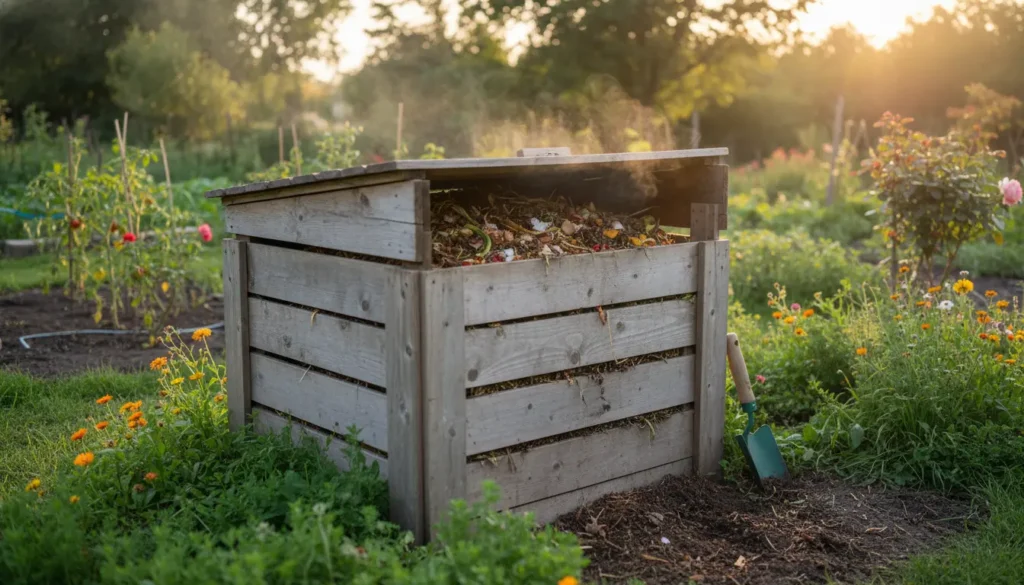
Why Home Composting Matters
Home composting turns kitchen scraps and yard waste into rich soil. It reduces landfill waste and gives your garden a natural fertilizer.
This guide explains the steps to start a compost bin, basic maintenance, and how to fix common problems. The instructions are practical and easy to follow for beginners.
Home Composting Basics
Compost needs three main things: organic materials, air, and moisture. Balance those elements and microbes will break down the waste into usable compost.
Keep materials in small pieces, maintain airflow, and check moisture regularly to keep the process steady.
What to Add to Your Compost Bin
Materials are grouped as greens and browns. Greens are high in nitrogen, and browns provide carbon. Aim for a rough 1 to 3 ratio of greens to browns by volume.
- Greens: fruit and vegetable scraps, coffee grounds, fresh grass clippings
- Browns: dry leaves, shredded paper, straw, cardboard
- Avoid: meat, dairy, pet waste, diseased plants, and oily foods
Choosing a Compost Bin for Home Composting
Pick a bin that fits your space and budget. Options include tumblers, enclosed plastic bins, and simple open piles.
- Tumblers: easy to turn and tidy, best for small gardens
- Open bins: cheap and effective, require more effort to aerate
- Stacked or layered systems: good for batch composting
How to Start a Compost Bin
Starting is simple. Choose a spot, add a base layer, and alternate greens and browns. Cover the pile to keep moisture consistent.
Here is a step-by-step starter routine to follow for the first month.
- Location: place the bin on soil in partial shade to encourage worms and drainage.
- Base layer: add coarse browns like small sticks or straw for drainage.
- Build layers: add 2-3 inches of greens followed by 6-8 inches of browns.
- Moisten: sprinkle water so the pile feels like a wrung-out sponge.
- Turn weekly: aerate by mixing the pile, or rotate a tumbler every few days.
Maintaining Your Compost Bin
Regular checks keep compost healthy. Look for proper temperature, moisture, and smell.
If the pile is active, it will warm up in the center to around 120-160°F (50-70°C). This indicates good decomposition.
Routine Tasks for Home Composting
- Turn or mix the pile every 1-2 weeks to add air and speed decomposition.
- Keep the pile moist but not soggy; add water in dry spells and cover in heavy rain.
- Add different materials to maintain balance and avoid long stretches of only one type.
Troubleshooting Common Problems
Problems are usually easy to fix. Identify the symptom, then adjust moisture, airflow, or materials.
- Bad odor: usually too wet or too many greens. Add browns and turn the pile.
- Slow decomposition: pile may be too cold, too dry, or too compacted. Add greens, water, and turn more often.
- Pests: avoid meat and oily foods, and use a closed bin or wire mesh if rodents appear.
When Is Compost Ready?
Compost is ready when it is dark, crumbly, and smells earthy. The timing depends on the method and how often you turn the pile.
Cold composting can take 6–12 months. With active turning and correct balance, compost can be ready in 2–3 months.
Adding small amounts of finished compost to new batches speeds up decomposition by introducing established microbes.
Using Finished Compost
Use finished compost as a soil amendment, mulch, or potting mix ingredient. It improves soil structure, water retention, and nutrient content.
Apply a 1–2 inch layer on garden beds or mix 20–30% compost into potting soil for containers.
Simple Case Study: A Small Urban Garden
Case study: Sarah, a renter with a small balcony in Portland, started a tumbler and kitchen bucket system. She collected vegetable scraps for six months and added shredded newspaper as browns.
By month three she had enough compost to top-dress two container herb pots. She reduced her household organic waste by an estimated 50% and needed fewer bought fertilizers.
Tips for Success with Home Composting
- Chop or shred large items to speed breakdown.
- Keep a small kitchen compost bin with a lid to collect scraps easily.
- Rotate materials to avoid long runs of the same type of waste.
- Use a garden fork or compost aerator to mix without heavy lifting.
Final Checklist for New Composters
- Choose the right bin for your space and needs.
- Balance greens and browns and maintain moisture.
- Turn regularly and monitor smell and temperature.
- Use finished compost to improve your soil and reduce waste.
Home composting is a practical way to cut waste and support healthier soil. Start small, keep the balance, and adjust based on how your pile behaves.