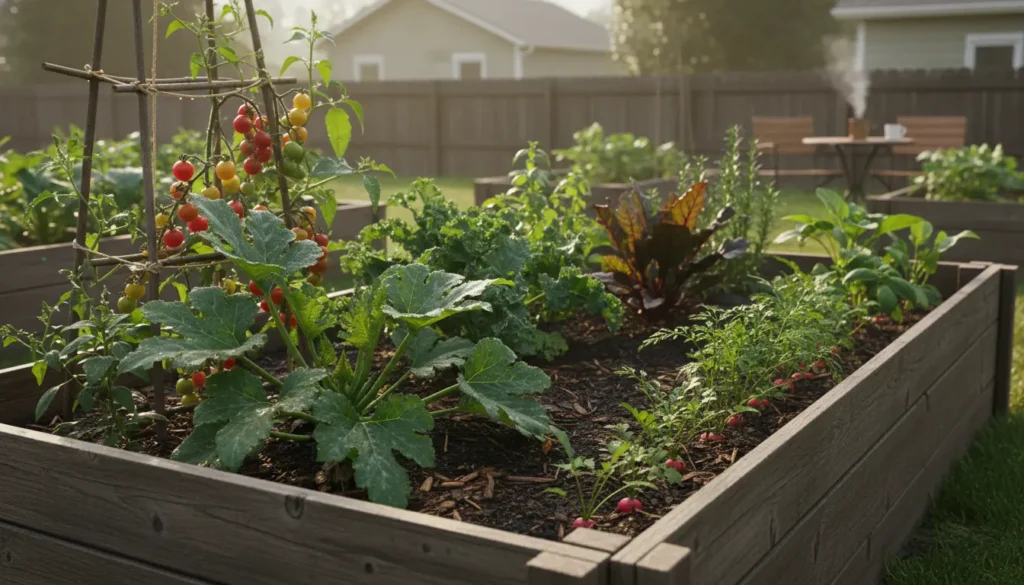
Starting a vegetable garden is an achievable project for most people, whether you have a yard, balcony, or a few containers. This guide explains clear, practical steps to help you start a vegetable garden for beginners and get reliable harvests in the first season.
Plan Your Vegetable Garden
Good planning reduces wasted time and money. Begin by deciding how much space you can commit and which vegetables you want to grow.
Consider what you and your family eat, how much time you can spend, and whether you prefer raised beds, containers, or in-ground rows.
Quick planning checklist
- Space available (square feet or number of containers)
- Sun exposure (hours of direct sun per day)
- Water access (hose, drip line, or watering can)
- Time per week for maintenance
Choose a Location for Your Vegetable Garden
Most vegetables need at least 6 hours of direct sunlight. Choose a spot with the best light and easy access to water.
Avoid low areas that collect cold air or sites shaded by large trees. If sunny ground is unavailable, use containers or raised beds placed on a balcony or patio.
Prepare Soil and Beds
Healthy soil is the foundation of a successful vegetable garden for beginners. Test the soil pH and texture if possible. Most vegetables prefer a pH between 6.0 and 7.0.
Improve soil by adding organic matter such as compost or well-rotted manure. For heavy clay, add compost and coarse sand; for sandy soil, add compost and peat or coconut coir to increase water retention.
Soil improvement steps
- Remove weeds and debris from the site.
- Spread 2–4 inches of compost over the soil surface.
- Work compost into the top 6–8 inches with a fork or tiller.
- Level the bed and water lightly to settle soil.
Choose Easy Vegetables for Beginners
Select crops that are forgiving and fast to harvest. These choices help build confidence and maintain motivation.
- Leafy greens: lettuce, spinach, Swiss chard
- Root vegetables: radishes, carrots, beets
- Fruiting plants: cherry tomatoes, bush beans, peppers
- Herbs: basil, parsley, chives
Planting: Seeds vs. Starts
Starting from seeds is cheaper and offers more variety, but transplants (starts) provide a head start and easier early success. Use seeds for carrots and radishes; use starts for tomatoes and peppers if your season is short.
Follow packet instructions for depth and spacing. Overcrowding is a common beginner mistake—give plants room to grow.
Watering and Fertilizing Your Vegetable Garden
Consistent watering is essential. Most vegetables need about 1 inch of water per week, delivered slowly to encourage deep roots.
Use soaker hoses or drip irrigation where possible. Mulch with straw or wood chips to retain moisture and suppress weeds.
Basic fertilizing tips
- Apply a balanced organic fertilizer at planting and again mid-season.
- Use compost tea or fish emulsion for a gentle nutrient boost.
- Avoid over-fertilizing leafy vegetables if you want root crops (it can reduce yield).
Pest and Disease Management for Beginners
Observe plants weekly for pests and disease. Early detection makes control much easier.
Use physical barriers like row covers for insects and hand-pick slugs or caterpillars. Encourage beneficial insects with flowering companion plants.
Simple organic controls
- Neem oil or insecticidal soap for soft-bodied pests
- Floating row covers to prevent beetles and moths
- Crop rotation to reduce soil-borne diseases
Harvesting and Succession Planting
Harvest regularly to encourage continuous production. Many vegetables are best picked early in the morning for peak flavor.
Practice succession planting: after harvesting a fast crop like radishes, plant another round in the same spot to extend yields through the season.
Tomato plants can produce fruit for up to 100 days from the first harvest if kept healthy and regularly pruned.
Small Real-World Example
Case study: Sarah converted a 4 ft by 6 ft raised bed into a productive vegetable garden.
She planted three tomato plants, two rows of bush beans, a bed of lettuce, and a few herbs. Sarah added 3 inches of compost before planting and used drip irrigation.
By the end of the season she harvested about 30 lbs of tomatoes, several pounds of beans, and weekly salads. Her total time investment averaged 2–3 hours per week.
Common Beginner Mistakes and How to Avoid Them
- Overwatering: Water deeply but less frequently to promote root growth.
- Planting too close: Follow spacing guidelines to avoid overcrowding.
- Ignoring soil health: Add compost yearly and consider a simple soil test.
- Skipping observation: Weekly checks catch problems early and save crops.
Final Tips to Start a Vegetable Garden for Beginners
Start small and expand as you gain experience. Keep a simple garden journal to record planting dates, varieties, and problems.
Join a local gardening group or extension service for region-specific advice. With basic planning, good soil, and regular care, most beginners can expect a successful first season.