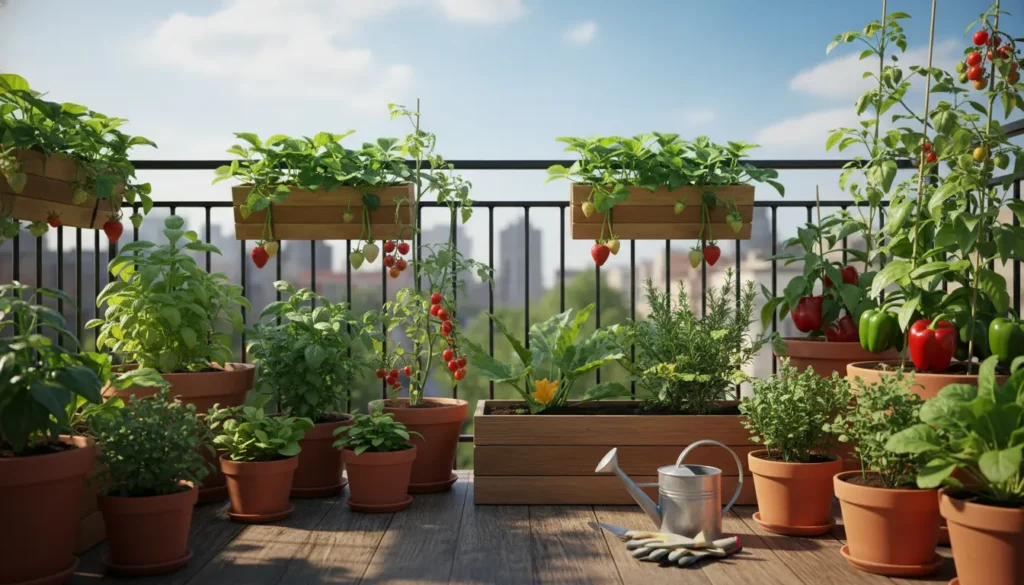
Why Small Space Vegetable Gardening Works
Small space vegetable gardening makes fresh produce possible for people without a yard. Containers, vertical systems, and careful plant selection let you grow food on balconies, patios, and rooftops.
This guide covers the core steps you need to plan, plant, and maintain a productive small space vegetable garden. Each section is practical and actionable.
Plan Your Small Space Vegetable Gardening Layout
Start by measuring the space and noting sun exposure. Most vegetables need 5–8 hours of sun, so map morning and afternoon light across the area.
Decide on containers, shelving, or a raised bed based on weight limits, access, and aesthetic goals. Keep traffic flow and watering access in mind.
Choosing Containers for Small Space Vegetable Gardening
Choose containers that match the plant’s root needs and the space’s load capacity. Use lightweight plastic or fabric pots for balconies and ceramic or wood for patios.
Recommended container sizes:
- Herbs and leaf greens: 6–10 inch pots
- Tomatoes and peppers: 5–10 gallon pots
- Root vegetables (carrots, beets): 12–18 inch deep containers
Soil and Fertility for Small Space Vegetable Gardening
Use a high-quality potting mix rather than garden soil. Potting mixes offer better drainage and aeration, which matter most in containers.
Fertilize regularly because nutrients wash out with frequent watering. Choose a balanced slow-release granular fertilizer or a liquid feed every 2–3 weeks.
Simple Soil Mix for Containers
Mix components for a reliable container medium: one part compost, one part peat-free potting mix, and one part perlite or coarse sand. This blend holds moisture while draining excess water.
Plant Selection and Timing for Small Space Vegetable Gardening
Pick compact or bush varieties labeled as suitable for containers. Look for terms like bush, patio, or dwarf on seed packets and plant tags.
Practice succession planting to maximize production in a small area. After harvesting lettuce, replace it with a warm-season crop like basil or peppers.
Best Vegetables for Small Space Vegetable Gardening
- Leafy greens: lettuce, spinach, Swiss chard
- Herbs: basil, parsley, cilantro
- Compact fruiting plants: patio tomatoes, dwarf peppers
- Root crops: radishes, carrots, baby beets
- Climbing plants for vertical use: pole beans, cucumbers
Watering and Drainage Tips
Consistent moisture is essential in containers. Water deeply until you see runoff and then allow the top inch of soil to dry before the next watering.
Install self-watering containers or use a drip line if you travel frequently. Ensure proper drainage holes to prevent root rot.
Pest Management in Small Space Vegetable Gardening
Small gardens are easier to monitor for pests. Inspect leaves and stems weekly, and remove damaged foliage promptly.
Use these tactics to manage common problems:
- Handpick slugs and caterpillars in the evening
- Use row covers to block flying insects early in the season
- Apply insecticidal soap or neem oil for soft-bodied insects
Seasonal Care and Rotation
Change crops each season to reduce disease build-up. Rotate plant families between containers rather than replanting the same species in the same pot.
In colder climates, consider a cold frame or moveable containers to extend the season. In hot climates, provide afternoon shade to prevent bolting.
Small Space Vegetable Gardening Did You Know?
Real-World Example: A Small Balcony Case Study
Case study: A renter with a 4-square-meter south-facing balcony planted a mix of five 10-inch pots and two 10-gallon containers. They selected patio tomatoes, peppers, leaf lettuce, basil, and radishes.
Results: Over one growing season they harvested regular salads and two large tomato batches. Key actions: morning watering, weekly liquid feed, and a trellis for tomato support. This setup required about 20 minutes of care every two days.
Quick Checklist for Starting Your Small Space Vegetable Gardening
- Measure space and note sun exposure
- Choose appropriate container sizes and lightweight materials
- Use quality potting mix and add compost
- Select compact varieties and plan succession plantings
- Set a watering schedule and ensure drainage
- Monitor pests weekly and act early
Final Tips for Success in Small Space Vegetable Gardening
Start small and expand as you learn which plants perform well in your microclimate. Keep records of planting dates and varieties to refine timing next season.
Stay flexible: container gardens allow you to rearrange plants for better light or to protect them from weather. With regular care, even the smallest spaces can yield fresh, homegrown vegetables.