Why Home Composting Matters
Home composting turns kitchen scraps and yard waste into a valuable soil amendment. Compost reduces landfill waste, improves soil structure, and helps retain moisture in garden beds.
This guide explains simple, practical steps to start and maintain a compost bin at home. The instructions are suitable for small yards, balconies, or community gardens.
Choosing the Right Compost Bin for Home Composting
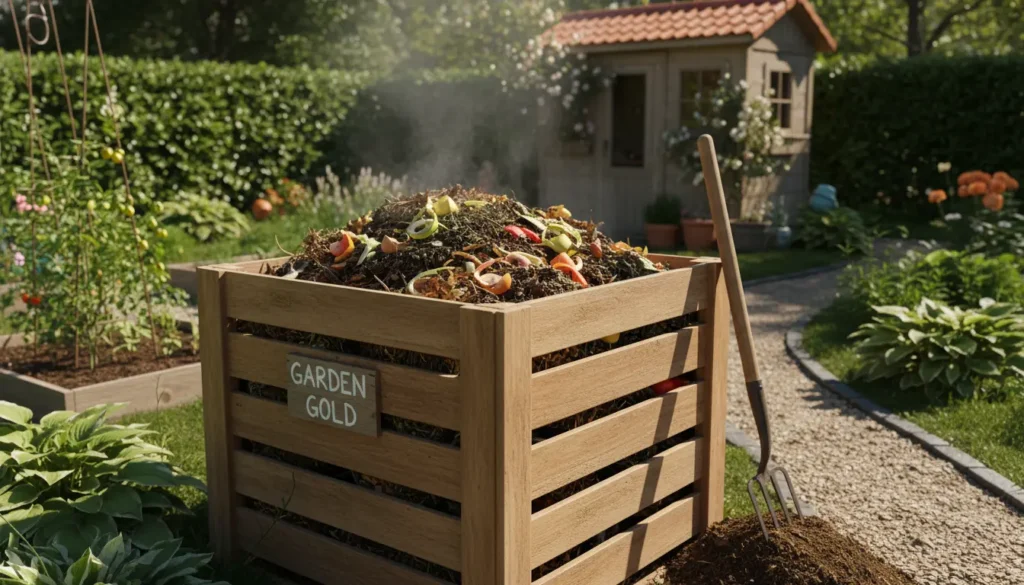
Select a bin based on space, budget, and how involved you want to be. Options include tumblers, stationary bins, and open piles.
- Compost tumbler: Faster mixing and fewer pests, good for small spaces.
- Stationary bin: Affordable and steady, suitable for larger yards.
- Open pile or heap: Minimal cost but needs more management and space.
Place the bin on soil or a well-drained surface to allow worms and microbes to enter. Choose a partially shaded location to keep the pile from drying out or overheating.
Basic Ingredients for Successful Home Composting
Compost needs a balance of carbon-rich and nitrogen-rich materials. Think of it as a simple recipe you can adjust as you go.
- Carbon (browns): Dry leaves, shredded paper, cardboard, straw.
- Nitrogen (greens): Fruit and vegetable scraps, coffee grounds, grass clippings.
- Water: The pile should be as moist as a wrung-out sponge.
- Air: Oxygen is essential; turn the pile to add air.
What to Avoid in Home Composting
Some items slow decomposition or attract pests. Keep these out:
- Meat, fish, bones, and dairy (attract animals and odor)
- Oily or greasy foods
- Diseased plant material or invasive weeds with mature seeds
- Pet waste from carnivores
Step-by-Step: How to Start a Compost Bin
Follow these steps to build a balanced compost pile that breaks down reliably.
- Layer a 4–6 inch base of coarse browns for drainage and airflow.
- Add a mix of greens and browns in roughly equal volume. Chop larger pieces to speed decomposition.
- Moisten each layer so it is damp but not soggy.
- Cover the top with browns to reduce flies and odors.
- Turn or mix the pile every 1–2 weeks to add oxygen.
Turning frequency depends on temperature and space. More turns speed up composting; fewer turns are fine for a low-effort approach.
Maintenance Tips for Healthy Home Composting
Consistent, small actions keep a pile healthy and odor-free.
- Monitor moisture: Add water during dry spells and more browns if the pile is too wet.
- Monitor temperature: A warm pile (100–140°F or 40–60°C) indicates active decomposition.
- Add greens when you have them, and cover with browns to maintain balance.
- Use a compost thermometer or touch test to check progress.
Troubleshooting Common Issues
Problems are usually easy to fix once you identify the cause.
- Bad smells: Add more browns and turn the pile to aerate it.
- Slow breakdown: Chop materials smaller and add nitrogen-rich greens.
- Pests: Avoid adding meat or dairy and use a closed bin or secure lid.
- Dry pile: Water and cover to retain moisture.
Well-managed compost can reduce household waste by up to 30 percent and can cut the carbon footprint of trash disposal significantly.
How to Use Finished Compost
Finished compost is dark, crumbly, and smells earthy. Use it to enrich potting mixes, top-dress lawns, or work it into garden beds.
- Potting mix: Replace up to 30% of potting soil with compost for better nutrition.
- Vegetable beds: Mix 1–2 inches of compost into the topsoil before planting.
- Mulch: Use compost as a thin mulch around shrubs and trees to retain moisture.
Small Real-World Case Study
Case: A two-person household in a city started composting in a 50-liter tumbler on their balcony. They collected vegetable scraps and coffee grounds in a small countertop bin and added shredded paper as browns.
After three months of weekly tumbling and moisture checks, the family produced enough compost to top-dress their container herb garden. Their weekly trash volume dropped by 40 percent, and their plants showed improved growth and water retention.
Quick Checklist for Successful Home Composting
- Choose a bin sized to your household waste volume.
- Balance greens and browns; keep the pile moist but not wet.
- Turn regularly for faster composting or leave to decompose slowly.
- Monitor for pests, odors, and proper temperature.
- Use finished compost to improve soil health and plant growth.
Final Tips for Ongoing Home Composting Success
Start small and learn by doing. Keep a compost log or checklist if you want to improve speed or troubleshoot issues over time.
Community resources like local gardening groups or municipal composting programs can offer advice and take materials you cannot compost at home.
With consistent attention and simple adjustments, home composting becomes a low-effort habit that benefits your garden and the environment.