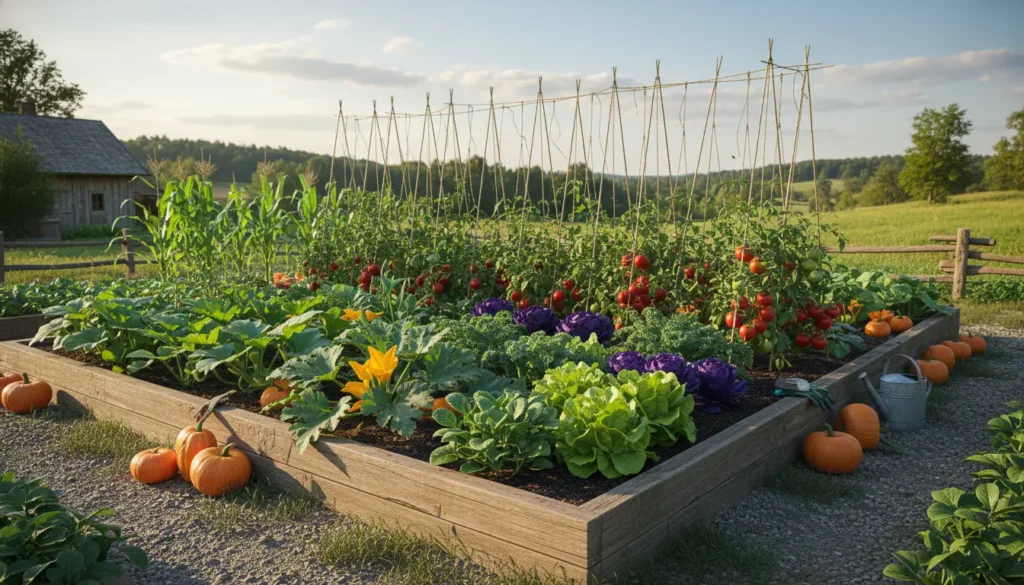
Why Start a Vegetable Garden
Growing your own vegetables saves money and improves food quality. A small garden can provide fresh produce, exercise, and mental health benefits.
How to Start a Vegetable Garden: Plan Your Space
Choose a location that gets at least 6 hours of direct sun daily. Consider proximity to water, convenience, and soil conditions.
Decide on garden type: in-ground, raised beds, or containers. Each option has different soil and space needs.
Assess Light and Size
Measure sun exposure over a day to confirm the site suits vegetables. Start small—one to three beds or several containers—if you are new to gardening.
Choose What to Grow
Select vegetables you and your household eat often to avoid wasted harvest. For beginners, try tomatoes, lettuce, radishes, and bush beans.
- Tomatoes: full sun, support needed
- Lettuce: partial shade tolerates cooler spots
- Radishes: quick harvest, beginner-friendly
- Bush beans: low maintenance, good yields
Prepare Soil and Beds
Good soil is the foundation of a productive vegetable garden. Test soil if possible, otherwise improve with organic matter.
Amend soil with compost or well-rotted manure to improve fertility and drainage. For raised beds, fill with a 60/40 mix of topsoil and compost.
Soil Preparation Steps
- Clear weeds and debris from the site.
- Loosen soil to at least 6–12 inches for roots to establish.
- Mix in 2–4 inches of compost and a balanced organic fertilizer if needed.
Planting: Seeds vs. Starts
Decide whether to sow seeds directly or transplant starts. Direct sow fast-growing crops like radishes and beans.
Use transplants for crops with longer seasons, such as tomatoes and peppers, to get an earlier harvest.
Planting Tips
- Follow spacing recommendations on seed packets or plant tags.
- Plant at the right depth—usually two to three times the seed diameter.
- Water gently after planting to settle soil around roots.
Watering and Feeding Your Garden
Consistent moisture is critical for vegetable growth. Water deeply and less frequently to encourage strong roots.
Mulch with straw or wood chips to reduce evaporation and suppress weeds. Apply a balanced organic fertilizer according to crop needs.
Watering Schedule Example
- New seedlings: water daily or when the surface is dry.
- Established plants: water 1–2 times weekly, adjusting for rain and heat.
- Use drip irrigation or soaker hoses to minimize leaf wetness and disease.
Managing Pests and Diseases
Healthy plants resist most pests and diseases. Monitor your garden weekly to catch problems early.
Use cultural controls first: crop rotation, clean tools, and removing infected plants. Employ physical barriers like row cover for insect protection.
Low-Toxic Options
- Handpick larger pests such as slugs and caterpillars.
- Use insecticidal soap or neem oil for soft-bodied insects.
- Encourage beneficial insects like ladybugs and lacewings.
Harvesting and Ongoing Care
Harvest regularly to encourage production and prevent overripening. Learn the visual cues for each crop to harvest at peak flavor.
After the season, remove plant debris to reduce disease carryover. Add compost and rotate crops the next year for soil health.
Interplanting fast growers like radishes between slower crops can maximize space and give harvests within weeks.
Simple Case Study: A Small Suburban Garden
Maria, a first-time gardener, converted two 4×4 foot raised beds in her backyard. She chose tomatoes, lettuce, and bush beans based on family preferences.
In the first season she amended soil with compost, mulched heavily, and used drip irrigation. By mid-summer she harvested continuous lettuce and several dozen tomatoes and a steady yield of beans.
Key outcomes: modest investment in compost and irrigation, minimal pest issues, and enough produce to supplement meals three times weekly.
Common Beginner Mistakes and Quick Fixes
- Overwatering: Check soil moisture before adding water; reduce frequency and water deeply.
- Planting too close: Thin seedlings or follow packet spacing to avoid crowding.
- Ignoring soil: Add compost annually and consider a basic soil test for persistent problems.
Final Checklist to Start a Vegetable Garden
- Pick a sunny location and decide on bed type.
- Prepare soil with compost and loosen to the proper depth.
- Choose easy crops and follow planting instructions.
- Water consistently, mulch, and monitor for pests.
- Harvest regularly and amend soil after the season.
Starting a vegetable garden is a step-by-step process that rewards patience and regular care. Begin small, learn from each season, and expand as your confidence grows.