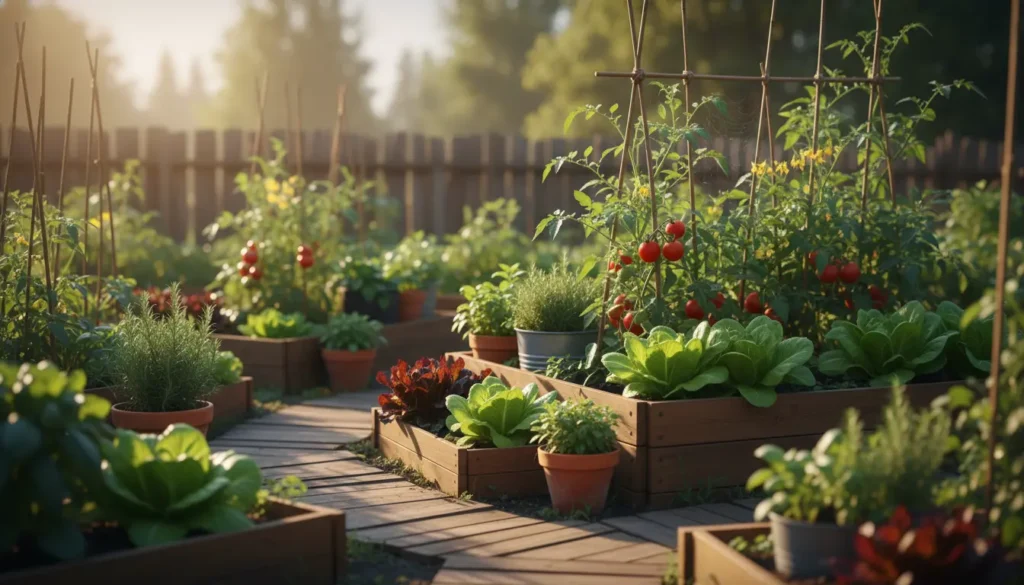
Why start a small vegetable garden
Starting a small vegetable garden gives you fresh produce, saves money, and connects you to the growing cycle. Small gardens fit balconies, patios, or a corner of a yard and are easier to manage than large plots.
Plan before you start a small vegetable garden
Good planning reduces mistakes and wasted effort. Choose plants that match your climate, space, and time availability.
Choose the right location
Most vegetables need 6–8 hours of sun. Pick a spot with steady sunlight and easy access to water. If you lack ground space, plan for containers or raised beds.
Decide between containers, raised beds, or ground plots
Containers are best for balconies and patios. Raised beds offer better soil control and drainage. Ground plots are fine when soil is healthy and drainage is good.
Prepare soil and containers
Healthy soil is the foundation of a productive garden. Test and amend soil before planting to ensure plants get nutrients and proper drainage.
Soil mix for small vegetable gardens
Use a balanced mix for containers: equal parts compost, topsoil, and aeration material like perlite or coarse sand. For raised beds, layer compost into the top 12 inches of soil.
- Buy a soil test kit or send a sample to a local extension service.
- Aim for a pH between 6.0 and 7.0 for most vegetables.
- Add compost annually to maintain fertility and structure.
Choose easy vegetables to start
Begin with fast, forgiving crops to build confidence. These vegetables require minimal care and deliver reliable yields.
- Lettuce and leafy greens — harvest multiple times.
- Radishes — mature in a few weeks.
- Cherry tomatoes — compact and productive.
- Herbs like basil, parsley, and chives — low maintenance.
- Bush beans — no staking required and high yield.
Planting schedule and spacing
Follow seed packet or plant label instructions for depth and spacing. Overcrowding reduces airflow and increases disease risk.
Succession planting
To maximize a small area, use succession planting. Stagger sowing every 2–3 weeks for continuous harvests throughout the season.
Watering and feeding a small vegetable garden
Consistent moisture is more important than frequent shallow watering. Deep, infrequent watering encourages stronger roots and healthier plants.
- Use a soaker hose or drip irrigation for efficiency.
- Water early in the morning to reduce evaporation.
- Feed plants with a balanced organic fertilizer every 3–4 weeks or use slow-release formulas.
Pest and disease management
Preventive care beats emergency measures. Healthy plants, good spacing, and clean beds reduce pest and disease pressure.
Organic pest control tips
Try manual removal, insecticidal soaps, or row covers for protection. Encourage beneficial insects like ladybugs and lacewings by planting flowers nearby.
Maintenance tasks for success
Weekly checks save time and prevent small problems from becoming big ones. Remove dead leaves, pinch back leggy growth, and harvest regularly.
- Mulch to conserve moisture and suppress weeds.
- Stake or cage plants like tomatoes early to avoid root disturbance.
- Rotate crops each season when possible to reduce disease buildup.
Planting basil near tomatoes can help repel some insect pests and may improve tomato flavor according to some gardeners.
Harvesting and storing your produce
Harvest at peak ripeness for best flavor. Pick lettuce and greens from the outside so the center keeps growing.
Store harvests properly: cool leafy greens quickly, and store root vegetables in a cool, dark place. Many herbs can be frozen or dried for later use.
Small real-world case study
Case study: Maria’s balcony garden started on a 6 x 3 foot balcony. She used three large containers and two window boxes to grow lettuce, cherry tomatoes, basil, and spring onions.
She set up a simple drip line and added compost before planting. Within six weeks she had continuous salad greens and tomatoes by mid-season. The setup used minimal space and supplied fresh produce for two people most of the summer.
Common beginner mistakes and how to avoid them
- Overwatering: check soil moisture before watering to avoid root rot.
- Planting too many varieties at once: start small and expand as you gain experience.
- Ignoring soil health: invest in compost and testing to improve yields.
Quick checklist to start a small vegetable garden
- Choose a sunny spot and decide container or bed.
- Test and amend soil; buy quality potting mix for containers.
- Select easy crops for your season and space.
- Set up watering and add mulch to conserve moisture.
- Monitor weekly and harvest regularly.
Starting a small vegetable garden is manageable with planning and simple care. Follow these steps, start with a few crops, and expand as you learn what works best in your space.