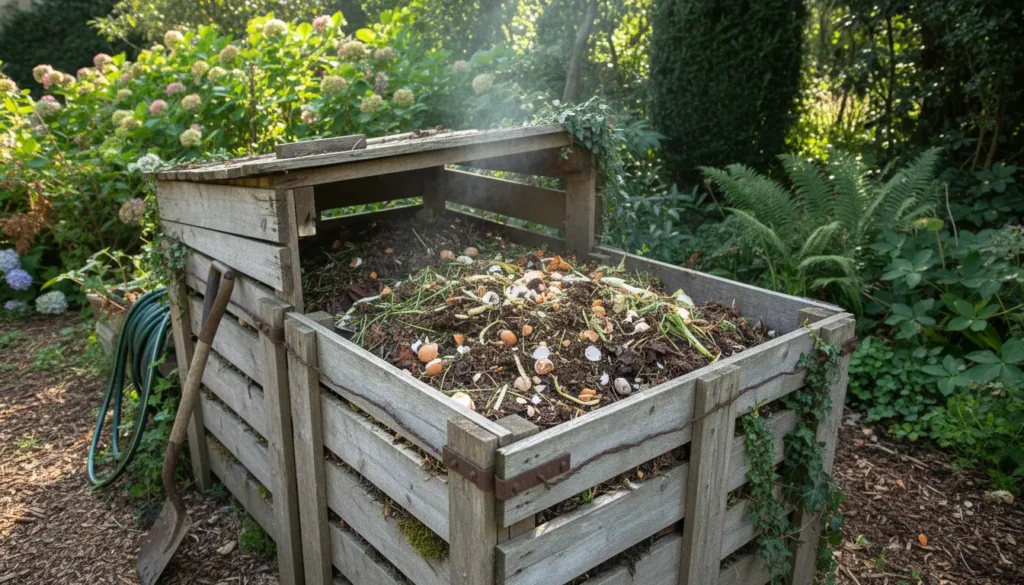
Why Home Composting Matters
Home composting turns kitchen and yard waste into a useful soil amendment. It reduces garbage, cuts methane from landfills, and improves soil structure for plants.
This guide gives step-by-step, practical instructions to start composting at home with minimal tools and space.
Home Composting Basics
Composting requires three core elements: carbon, nitrogen, and air. Carbon provides bulk and structure, while nitrogen feeds microbes that break materials down.
Balance these elements and keep the pile moist and aerated to produce compost within weeks to months.
What to Compost
- Green materials (nitrogen): fruit and vegetable scraps, coffee grounds, fresh grass clippings.
- Brown materials (carbon): dry leaves, shredded paper, cardboard, straw.
- Small amounts of wood chips or sawdust can be added but avoid large woody branches unless shredded.
What Not to Compost
- Meat, dairy, and oily foods that attract pests and create odors.
- Diseased plants, invasive weeds with seeds, and treated wood.
- Cats or dog feces due to pathogens.
How to Start Home Composting
Choose a method that fits your space: a backyard bin, open pile, or a small indoor composting system. Each method needs the basics: balance, moisture, and airflow.
Step-by-Step Backyard Bin Setup
- Pick a location that is convenient and has partial shade.
- Use or build a bin about 3 feet wide for proper heat retention.
- Start with a layer of coarse brown materials to allow airflow.
- Add alternating layers of greens and browns, aiming for roughly 2 parts brown to 1 part green by volume.
- Keep the pile as moist as a wrung-out sponge; add water during dry spells.
- Turn the pile every 1 to 2 weeks to introduce oxygen and speed decomposition.
Indoor or Apartment Composting Options
For small spaces, use a small tumbler, bokashi system, or worm bin. Worm composting is efficient and low odor when managed correctly.
- Worm bins need bedding, regular food scraps, and a balance of browns to prevent smells.
- Bokashi ferments food waste quickly but requires burying or finishing the fermented material in soil or a compost pile.
Troubleshooting Common Problems
Compost that smells like ammonia has too much nitrogen. Add more browns and turn it to aerate. If the pile is dry and slow, add water and more greens.
Pests usually indicate food scraps exposed or meat and dairy present. Remove offending items and use a closed bin or secure lid.
Speeding Up Composting
- Shred materials to increase surface area.
- Keep the pile warm by insulating it with straw or placing it in a sunny spot.
- Turn frequently to boost microbial activity.
How to Use Finished Compost
Finished compost is dark, crumbly, and earthy-smelling. Use it as a top dressing, mix it into garden beds, or add to potting mixes to improve fertility.
A general application rate is 1 to 2 inches spread over beds and mixed into the top few inches of soil.
Small Case Study: A Simple Backyard Win
María in Austin started a 3-foot compost bin using a purchased plastic tumbler. She added kitchen scraps and yard trimmings over six months and turned the bin weekly.
She balanced greens and browns by saving dry leaves and shredding newspaper. After four months, she had nutrient-rich compost that improved her vegetable garden yields by the next season.
Practical Tips and Examples
- Collect food scraps in a small countertop container with a tight lid to reduce trips to the bin.
- Store browns — shredded cardboard or fallen leaves — in a dry bin for easy layering.
- Use a thermometer if you want to track the pile; 130 to 150°F is ideal for rapid composting.
Quick Checklist to Start Composting
- Choose your bin type and location.
- Gather a supply of browns and a plan for greens.
- Monitor moisture and turn regularly.
- Harvest compost when it is dark and crumbly.
Final Notes on Home Composting
Home composting is flexible. You can scale the system to your household and preferences. Small changes in routine yield steady benefits for the garden and the planet.
Start simple, observe the pile, and adjust materials and turning frequency as you gain experience.