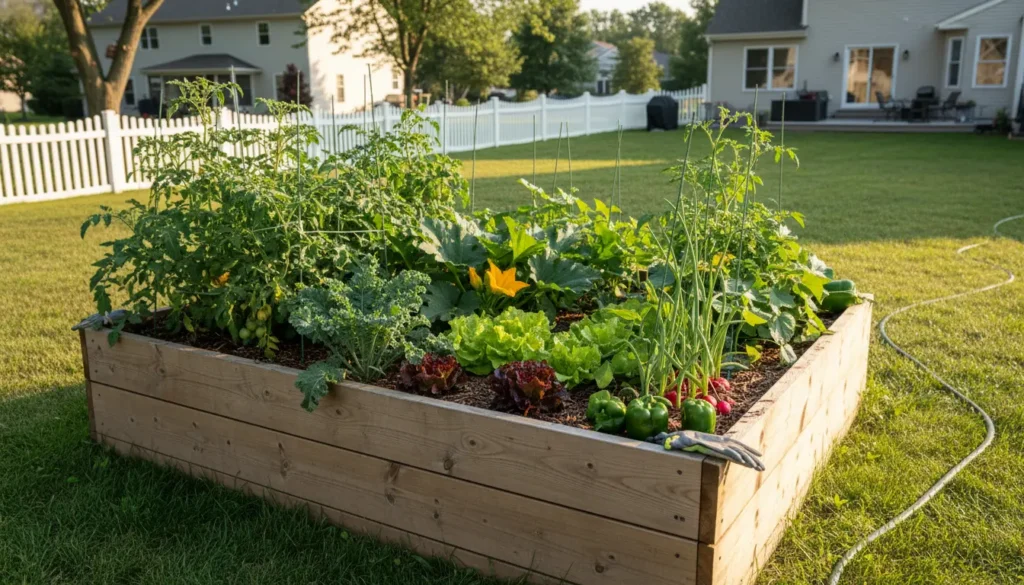
Why Start a Small Vegetable Garden
Starting a small vegetable garden is an efficient way to grow fresh food, save money, and learn practical gardening skills. Small gardens fit balconies, patios, or a tiny backyard and can produce weeks of produce when planned well.
Planning Your Small Vegetable Garden
Good planning reduces wasted time and resources. Start by assessing sunlight, space, and your daily routine.
Choose the Right Location for a Small Vegetable Garden
Most vegetables need at least six hours of direct sunlight. Observe potential sites across a full day to note shade patterns.
Consider proximity to a water source and convenience for daily care. Small beds near a door will get more attention.
Decide on Garden Type
Choose among in-ground beds, raised beds, containers, or vertical setups. Each works for small spaces but differs in cost and maintenance.
- Raised beds: Good drainage and soil control.
- Containers: Flexible and ideal for balconies.
- Vertical towers: Save ground space for vining crops.
Preparing Soil for a Small Vegetable Garden
Healthy soil is the foundation of a productive garden. Prioritize loamy, well-draining soil with plenty of organic matter.
Soil Mix for Containers and Raised Beds
Use a reliable mix: one-third compost, one-third topsoil, one-third coarse material like perlite or coconut coir for drainage. Avoid using only garden soil in containers.
Amend In-Ground Soil
Test soil pH and nutrient levels with a simple kit. Add compost and a balanced organic fertilizer as needed to reach a loose, crumbly texture.
Choosing Vegetables for a Small Vegetable Garden
Select crops suited to your climate, season, and space. Focus on high-yield, space-efficient varieties to maximize output.
- Leafy greens (lettuce, spinach) — quick harvest cycles.
- Herbs (basil, parsley) — useful in small pots and continuous harvest.
- Compact tomatoes and peppers — determinate or patio varieties.
- Radishes and carrots — good for deep, narrow containers.
- Green beans — bush varieties for small spaces.
Planting and Layout Tips for a Small Vegetable Garden
Plan succession planting to keep beds productive. Replace harvested crops with a new sowing or transplant.
Plant Spacing and Companion Planting
Follow seed packet spacing but consider intensive planting for small plots. Use companion planting to deter pests and improve growth.
- Plant basil near tomatoes to enhance flavor and repel pests.
- Marigolds can reduce certain insect pests.
Watering and Feeding Your Small Vegetable Garden
Consistent moisture is essential. Water deeply and less often to encourage strong roots.
- Use a soaker hose or drip irrigation for efficiency.
- Water in the morning to reduce fungal disease risk.
- Fertilize with a balanced organic fertilizer every 3–4 weeks during the season.
Pest and Disease Management in a Small Vegetable Garden
Small gardens can be easier to manage for pests with regular monitoring. Inspect leaves and stems weekly.
- Hand-pick larger pests like caterpillars and slugs.
- Use row covers to protect seedlings from insects and birds.
- Rotate crops annually to reduce soil-borne disease buildup.
Harvesting and Extending the Season
Harvest vegetables promptly when ripe; this encourages further production. Keep a calendar for sowing and expected harvest dates.
- Use cold frames or cloches to extend the season by several weeks.
- Succession plant every 2–3 weeks for continuous harvest of fast crops like salad greens.
Small Vegetable Garden Case Study
Emma, an apartment dweller, used two 4×2 foot raised beds on her balcony to grow salad greens, cherry tomatoes, and bush beans. She rotated crops seasonally and used compost collected from a community drop-off.
Over one summer she harvested weekly salads and saved about $150 in grocery purchases. Her keys were daily watering, timely harvesting, and using compact crop varieties.
Practical Tips and Quick Checklist for Starting a Small Vegetable Garden
Keep a short checklist to simplify setup and maintenance.
- Pick a sunny site near water.
- Choose raised beds or containers for small spaces.
- Prepare soil with compost and check pH.
- Select compact, high-yield crops for your climate.
- Water deeply, fertilize regularly, and monitor for pests.
- Succession plant to maximize harvests.
Conclusion: Start Small and Learn
Starting a small vegetable garden is a manageable project with big rewards. Begin with a simple bed or container setup and expand as you learn what grows best in your space.
Regular observation, modest investments in soil and water systems, and choosing the right crops will make your small vegetable garden productive and enjoyable.