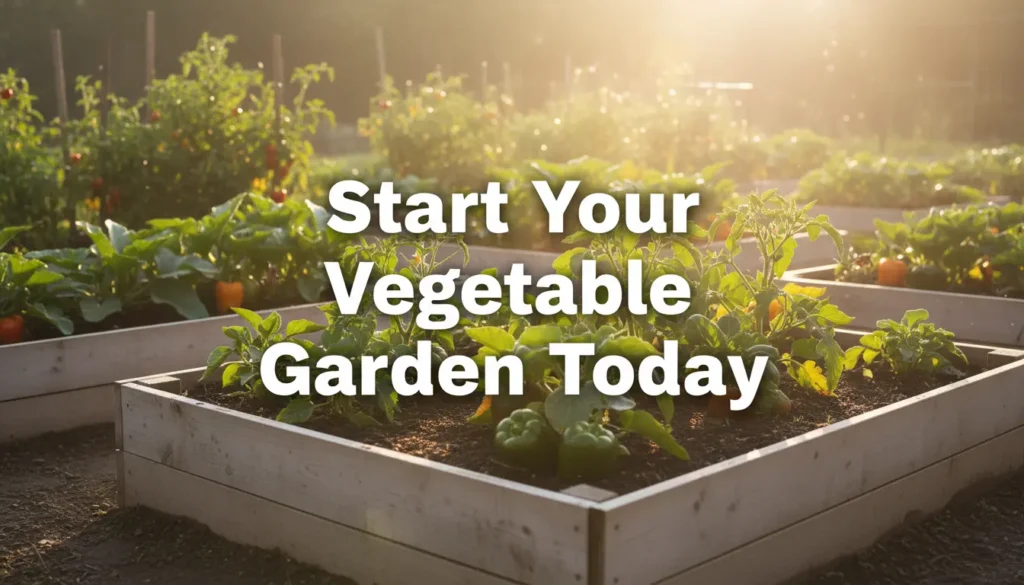
Why Start a Vegetable Garden
Starting a vegetable garden gives you fresh produce, reduces grocery costs, and connects you with nature. Even a small balcony box can produce herbs and salad greens for your kitchen.
Planning to Start a Vegetable Garden
Good planning reduces wasted time and increases yields. Start by listing what you and your family eat regularly and choose vegetables that match your climate and season.
Decide Garden Size and Type
Choose between containers, raised beds, or in-ground plots. Containers suit balconies and patios, raised beds improve drainage and soil control, and in-ground plots work well for larger spaces.
- Container gardens: best for small spaces and beginners.
- Raised beds: easier on your back and allow better soil mixes.
- In-ground: cost-effective for larger areas with good native soil.
Choose Location for a Vegetable Garden
Most vegetables need at least 6 hours of direct sun per day. Check sunlight at different times to find the brightest spot.
Also consider water access, wind protection, and convenience to your kitchen.
Soil and Bed Preparation
Healthy soil is the foundation of a productive vegetable garden. Test or observe your soil to know if it drains well or stays soggy after rain.
Improve Soil Quality
Add organic matter like compost or well-rotted manure to improve structure and fertility. For raised beds or containers, use a mix of topsoil, compost, and a light component like perlite or coarse sand.
- Clear weeds and debris from the area.
- Spread 2–4 inches of compost over the bed and work it into the top 6–8 inches.
- Rake the bed level and create rows or planting blocks.
Choosing Vegetables to Plant
Choose easy, fast-growing crops that give reliable results for beginners. Consider starting with salad greens, radishes, bush beans, tomatoes, and herbs.
Companion Planting Basics
Plant combinations like basil with tomatoes or marigolds near vegetables to reduce pests. Keep heavy feeders like corn away from shallow-rooted crops.
Planting Schedule and Seeds vs. Transplants
Follow local frost dates to set a planting schedule. Cool-season crops like lettuce and peas go in earlier, while warm-season crops like tomatoes and peppers wait until after the last frost.
- Start seeds indoors for longer-season plants like peppers and tomatoes.
- Use transplants from nurseries for faster results and easier establishment.
Watering and Mulching Tips
Consistent moisture is essential. Water deeply and less frequently to encourage strong roots. Morning watering reduces disease risk compared with evening watering.
Mulch around plants with straw, leaves, or wood chips to retain moisture, suppress weeds, and moderate soil temperature.
Watering Guidelines
- Check soil moisture 1–2 inches below the surface before watering.
- Aim for 1–1.5 inches of water per week, more in hot weather.
- Use drip irrigation or soaker hoses to deliver water to roots efficiently.
Common Problems and Simple Solutions
Pests, diseases, and nutrient deficiencies are common but manageable. Inspect plants weekly and act early.
- Remove damaged leaves and destroy infected material to limit disease spread.
- Use row covers to protect young plants from insects and birds.
- Rotate crops each year to reduce soil-borne disease build-up.
Harvesting and Ongoing Care
Harvest vegetables when they are ripe to encourage continued production. For many crops, frequent picking (especially beans and zucchini) leads to higher yields.
Keep beds tidy, top up mulch as needed, and add compost after the main harvest to restore nutrients.
Small Case Study: A Backyard Raised Bed Success
Case Study: Sarah converted a 4×8 foot patch into two raised beds. She chose tomatoes, lettuce, bush beans, and basil. By improving soil with compost and using drip irrigation, she harvested tomatoes from June to October.
Her tips: start small, plant what you eat, and keep a simple calendar for watering and feeding. The beds produced enough tomatoes and greens to reduce weekly produce purchases by half.
Many vegetables, like lettuce and spinach, will bolt to seed in hot weather. Plant them in partial shade or succession sow to extend harvests.
Quick Checklist to Start a Vegetable Garden
- Choose a sunny location and define garden size.
- Test and amend soil with compost.
- Select beginner-friendly crops and plant after frost risk passes.
- Set up simple irrigation and mulch beds.
- Inspect weekly and harvest regularly.
Final Tips for Beginners
Keep records of planting dates and varieties to learn what works. Start small and expand after your first season.
Gardening is practice-based: expect mistakes, learn from them, and enjoy the steady improvements season to season.