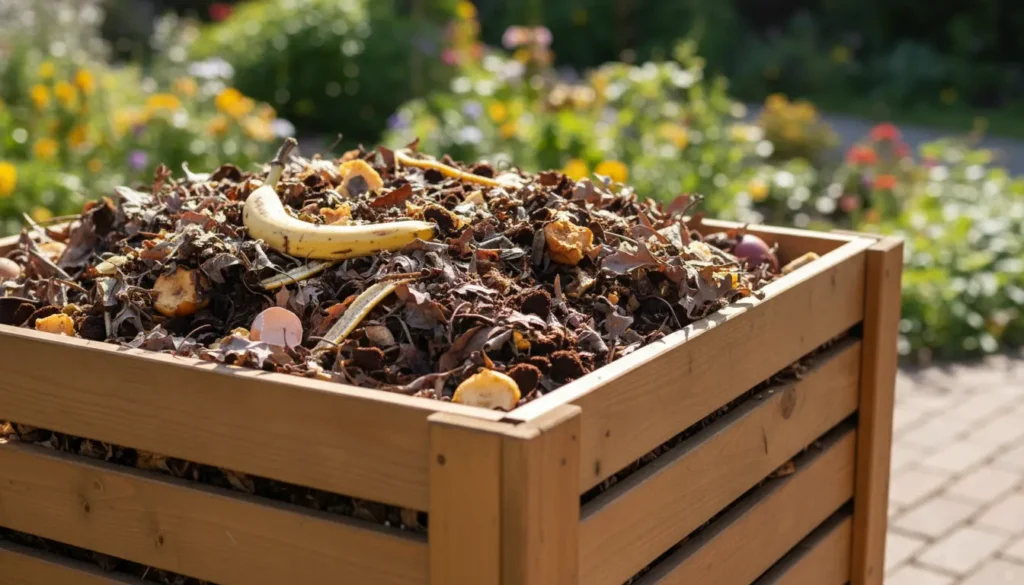
Composting at home turns kitchen scraps and yard waste into a valuable soil amendment. This guide gives clear, actionable steps for beginners to start composting quickly and effectively.
Why Home Composting Matters
Composting reduces household waste and returns nutrients to your garden. It saves landfill space and improves soil structure and plant health.
For beginners, composting is an easy way to practice sustainable living without big investments.
Getting Started with Home Composting
Decide where you will compost. Choose a location with partial sun and good drainage, close enough to the kitchen for convenience.
Next, select a composting method that fits your space and schedule.
Common Compost Systems for Beginners
- Open pile: Simple and low-cost for yards with space.
- Compost bin: Contained, tidier, and better for urban yards.
- Tumbler: Easier turning, faster breakdown, works well for small households.
- Worm bin (vermicompost): Ideal for indoors or apartments; produces nutrient-rich castings.
Choosing a Compost System
Match the system to your lifestyle. Tumblers suit busy people who want faster results.
Worm bins are great for those with limited outdoor space and who mostly have kitchen scraps.
Building the Right Mix
Success comes from balancing carbon rich (brown) and nitrogen rich (green) materials. Aim for a general ratio of roughly 3:1 brown to green by volume.
- Green materials: vegetable scraps, fruit peels, fresh grass clippings, coffee grounds.
- Brown materials: dry leaves, shredded paper, cardboard, straw, wood chips.
- Aeration materials: small branches or straw to keep air channels open.
Examples: Mix one bucket of kitchen scraps with three buckets of shredded leaves or cardboard.
Maintaining Your Compost
Monitor moisture and aeration. Compost should feel like a damp sponge — not soaking wet, not bone dry.
Turn the pile every 1–2 weeks for faster decomposition. Use a pitchfork or, if using a tumbler, rotate regularly.
Temperature and Time
Active piles heat up to 120–160°F (50–70°C). Heat speeds decomposition and kills seeds and pathogens.
Cooling piles will still decompose more slowly over months. Finished compost can take 3 months to a year depending on method and care.
Using Finished Compost
Finished compost is dark, crumbly, and earthy smelling. Use it to enrich garden beds, potting mixes, and lawn topdressings.
- Vegetable gardens: mix 1–2 inches into topsoil before planting.
- Container plants: blend 20–30% compost into potting soil.
- Lawn: spread a thin layer (1/4 inch) to improve soil health.
Common Problems and Fixes for Beginners
- Bad odor: add more brown materials and turn the pile to add air.
- Pests: avoid meat, dairy, and oily foods. Use a closed bin or bury food scraps in the pile.
- Slow breakdown: check moisture and add nitrogen-rich greens or chop materials into smaller pieces.
- Too wet: add dry browns and mix to improve aeration.
Small Real-World Example
Case study: A small urban household started a 50-gallon tumbling composter. They added kitchen scraps and shredded cardboard in a 1:3 ratio and turned the tumbler twice a week.
After four months they had rich compost for their balcony vegetable containers. Their weekly food waste was reduced by about 60%, and their tomato plants produced fuller foliage and larger fruit.
Quick Start Checklist for Composting Beginners
- Choose a compost system that fits your space.
- Collect greens (kitchen scraps) and browns (leaves, cardboard).
- Build layers or mix materials at roughly 3:1 brown to green.
- Maintain moisture like a damp sponge and turn regularly.
- Use finished compost to improve soil and reduce fertilizer needs.
Home composting is a low-cost, practical way to reduce waste and boost garden health. Start small, observe your pile, and adjust the mix and maintenance over time.