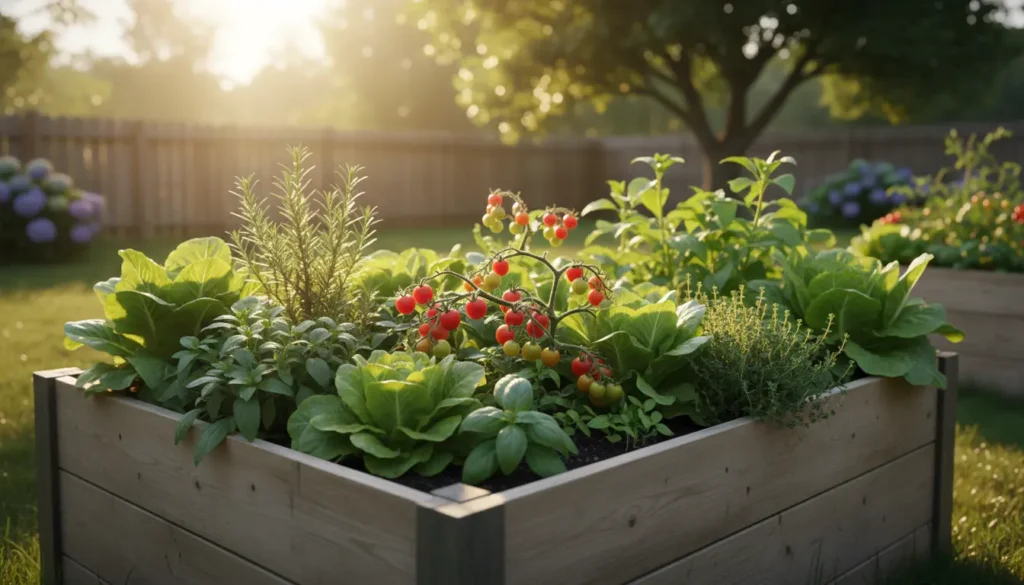
Why start a vegetable garden
Starting a vegetable garden gives you fresh produce, lower grocery bills, and a satisfying outdoor hobby. You do not need a large space to grow useful amounts of vegetables.
This guide explains how to start a vegetable garden with clear steps for planning, soil, planting, and routine care.
Plan your vegetable garden
Good planning reduces wasted time and expense. Choose a spot that gets at least six hours of sunlight daily and has good drainage.
Consider these planning steps:
- Decide container, raised beds, or in-ground rows based on available space and budget.
- Pick 3–6 easy vegetables for your first season, such as lettuce, tomatoes, radishes, beans, and zucchini.
- Sketch a simple layout showing paths, beds, and water access.
Choose the right location
Sunlight and access to water are the most important factors. Morning sun is ideal for many vegetables.
Avoid low areas that collect cold air or stay soggy after rain.
Prepare the soil for your vegetable garden
Soil quality determines how well vegetables grow. Test soil texture and acidity with a simple test kit or a soil lab sample.
If you have heavy clay or sandy soil, amend it with compost and organic matter to improve structure and nutrients.
- Aim for a loose, crumbly soil with good drainage.
- Mix in 2–4 inches of compost over existing soil and work it in to 6–8 inches depth.
- Consider raised beds if soil is poor or compacted.
Pick vegetables and planting times
Choose vegetables suited to your climate and growing season. Use seed packets or plant tags to check days to maturity and frost tolerance.
Start with quick crops and low-maintenance varieties:
- Fast growers: radishes, lettuces, spinach
- Warm-season staples: tomatoes, peppers, cucumbers
- Low effort: bush beans, Swiss chard, zucchini
Succession planting and companion ideas
Succession planting keeps your garden producing longer. Sow a new row of lettuce every 2–3 weeks for a continuous harvest.
Use companion planting to make efficient use of space, such as planting basil near tomatoes to help flavor and deter pests.
Planting and basic care
Follow spacing and depth instructions on seed packets or plant labels. Overcrowding causes disease and poor yields.
Establish a simple routine for watering, weeding, and monitoring pests.
- Water deeply once or twice a week rather than light daily sprinkling. Adjust for rainfall.
- Mulch beds with straw or shredded leaves to conserve moisture and suppress weeds.
- Check plants weekly for pests, yellowing leaves, or signs of stress.
Watering tips for vegetable gardens
Morning watering reduces disease risk by letting foliage dry. Use a soaker hose or drip irrigation for efficient watering.
Measure with a rain gauge: aim for about 1 inch of water per week, more in hot weather.
Feeding and soil health
Vegetables need regular nutrients. Start with compost mixed into the soil, then supplement with a balanced organic fertilizer if growth is slow.
Use slow-release fertilizers or liquid feeds according to package directions. Avoid over-fertilizing, which can promote foliage over fruit.
Pest and disease basics
Preventive practices reduce most problems: clean tools, crop rotation, and healthy soil. Hand-pick large pests and use row covers for protection when needed.
For persistent problems, identify the pest or disease before applying treatments. Many home remedies and targeted organic controls work well for small gardens.
Harvesting and storage
Harvest vegetables at peak ripeness for best flavor and nutrition. Regular harvesting often encourages more production in plants like beans and zucchini.
Store produce properly: leafy greens in the fridge wrapped in a damp towel, root vegetables in a cool dark place, and tomatoes at room temperature away from direct sun.
Simple case study: Small backyard start
Maria, a first-time gardener, converted a 10×6 foot patch of lawn into two 4×3 foot raised beds. She filled them with compost-amended soil and planted tomatoes, lettuce, and bush beans.
By following a weekly check routine, mulching, and watering with a soaker hose, she harvested fresh salad greens within five weeks and a steady supply of beans and tomatoes through summer. Her setup cost under 200 in materials and paid back in produce and reduced store trips.
Practical checklist to start a vegetable garden
- Choose location with 6+ hours of sun
- Decide bed type: in-ground, raised, or containers
- Test and amend soil with compost
- Select 3–6 easy crops for first season
- Plant at recommended spacing and depth
- Set a watering schedule and mulch beds
- Monitor for pests and harvest regularly
Final tips on how to start a vegetable garden
Keep your first season simple. Focus on a few reliable crops and learn by doing. Every season you will refine your layout and timing.
Record what you plant and when you harvest. Small adjustments year to year lead to larger yields and fewer problems.
If you want a quick starter list: try lettuce, radish, bush beans, cherry tomatoes, and basil. They are forgiving and provide a variety of fresh food for a new vegetable gardener.