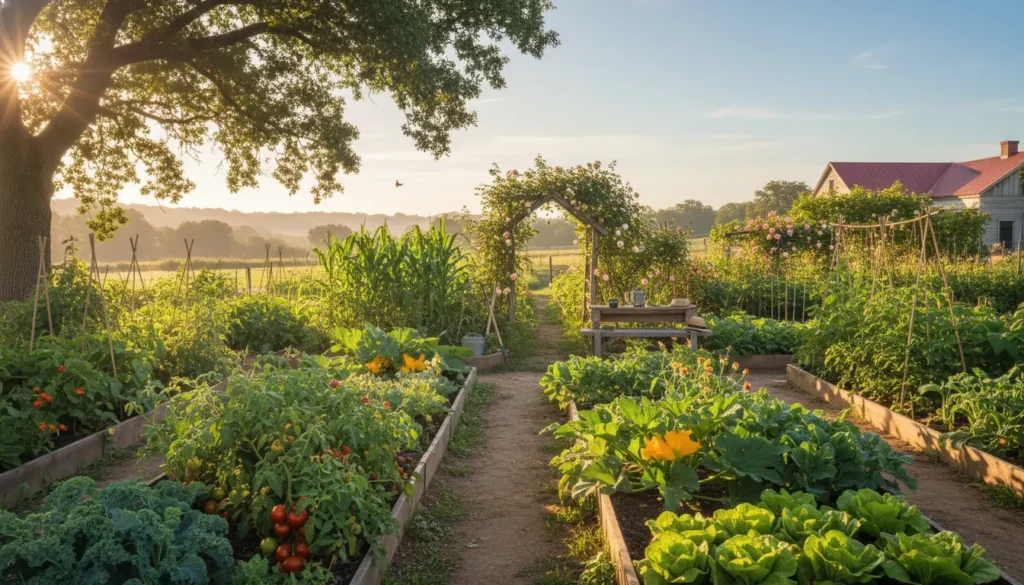
How to start a vegetable garden: first steps
Starting a vegetable garden is a practical project you can complete in stages. This guide gives clear, actionable steps so beginners can get plants growing quickly and reliably.
Focus first on location, soil, and plant choice. These three factors determine most of your short-term success and long-term maintenance needs.
Choose the right location to start a vegetable garden
Select a spot that gets at least six hours of direct sun daily for most vegetables. More sun generally means more productive plants and fewer pest problems.
Consider access to water and convenience. A garden near a hose or rain barrel and close to your kitchen makes daily care easier.
Location checklist
- Sun exposure: 6+ hours for vegetables.
- Water access: hose, drip, or rain barrel nearby.
- Drainage: avoid low spots that stay soggy.
- Wind protection: fences or hedges reduce damage.
Prepare soil for a vegetable garden
Good soil is the most important long-term investment for any vegetable garden. Aim for loose, well-draining loam rich in organic matter.
Test your soil pH and texture before planting. Many vegetables prefer a pH between 6.0 and 7.0.
Basic soil preparation steps
- Remove grass and weeds or use a no-dig method by adding compost on top.
- Incorporate 2–4 inches of compost into the top 6–8 inches of soil.
- Add a balanced organic fertilizer if a soil test indicates nutrient needs.
- Mulch after planting to conserve moisture and suppress weeds.
Select easy vegetables to start a vegetable garden
Begin with low-maintenance, high-reward crops. Fast-growing vegetables give early satisfaction and teach basic garden care.
Beginner-friendly plant list
- Leafy greens: lettuce, spinach, arugula (quick harvest).
- Root crops: radishes and carrots (tolerant of partial sun).
- Beans and peas: fix nitrogen and grow quickly.
- Tomatoes and peppers: productive in warm climates with staking.
Planting tips to start a vegetable garden right
Follow spacing and depth recommendations on seed packets or plant tags. Overcrowding increases disease risk and reduces yields.
Stagger plantings of quick crops like lettuce to extend harvests. Succession planting keeps the bed productive through the season.
Watering and feeding for steady growth
Water deeply and infrequently to encourage strong roots. Aim for about 1 inch of water per week, more in hot weather or for containers.
Use a balanced organic fertilizer once plants are established, or side-dress with compost mid-season for heavy feeders like tomatoes.
Routine care and common problems in a vegetable garden
Routine care includes weeding, monitoring for pests, and checking soil moisture. Short daily or every-other-day checks prevent small issues from becoming big problems.
Common problems include aphids, fungal leaf spots, and blossom end rot. Identify the problem early and use targeted remedies like insecticidal soap or calcium amendments.
Pest management basics
- Inspect plants weekly, looking under leaves and at new growth.
- Introduce beneficial insects with companion plants or avoid broad-spectrum pesticides.
- Use physical barriers like row covers for early season pests.
Companion planting, such as growing basil near tomatoes, can improve flavor and reduce pests. Simple plant pairings help biodiversity and garden resilience.
Seasonal planning to keep your vegetable garden productive
Plan for cool-season and warm-season crops to get the most from your space. Early spring and late summer plantings can extend harvest windows.
Use row covers or cold frames to protect young plants and extend the season on both ends.
Simple crop rotation approach
- Year 1: Leafy greens and legumes in Bed A.
- Year 2: Root crops in Bed A.
- Year 3: Fruiting crops (tomatoes, peppers) in Bed A.
Real-world example: small yard success story
Case study: A homeowner converted a 10×10 foot sunny corner to three raised 4×2 foot beds. They amended the native soil with compost, planted tomatoes, beans, and lettuce, and set up a soaker hose on a timer.
In the first season they harvested enough lettuce and tomatoes for weekly salads and froze extra beans. The hands-on routine took 15 minutes a day during peak season and reduced grocery spending.
Final checklist to start a vegetable garden
- Choose a sunny, well-drained location.
- Improve soil with compost and test pH.
- Select easy crops suited to your climate.
- Water deeply, mulch, and monitor pests weekly.
- Keep records of planting dates and successes for next year.
Starting a vegetable garden is a step-by-step process that favors preparation over speed. With the right site, soil, and plant choices, even a small plot can produce a rewarding harvest in the first season.