Why Home Composting Matters
Home composting turns food scraps and yard waste into valuable soil. It reduces landfill volume and returns nutrients to your garden.
This guide explains easy steps for successful home composting for beginners, with practical tips and a short case study you can copy.
Basic Concepts of Home Composting
Compost is organic matter that decomposes into a crumbly, earthy material called humus. Microorganisms, oxygen, moisture, and the right mix of materials break waste down.
Key terms beginners should know: brown materials (carbon), green materials (nitrogen), aeration, and moisture balance.
What to Compost
- Greens (nitrogen): vegetable scraps, fruit peels, coffee grounds, fresh grass clippings.
- Browns (carbon): dry leaves, straw, shredded paper, cardboard without glossy ink.
- Small amounts of yard waste: small branches and trimmed plants.
What to Avoid
- Meat, fish, bones, and dairy (attract pests and cause odors).
- Diseased plants, persistent weeds with seeds, pet waste.
- Oily foods and large quantities of citrus or onion peels if you have limited microbes.
Choosing a Composting Method
Pick a method that fits your space and time. Beginners often choose between a simple pile, a closed bin, or a tumbler.
Pile or Heap
Good for large yards. It requires turning for aeration and can be less tidy but is low-cost.
Bin Systems
Bins keep pests out and look neater. Use a plastic or wooden bin with ventilation holes. Bins reduce moisture loss in dry climates.
Tumblers
Tumblers make turning easy and speed up decomposition. They are ideal if you want faster compost with less manual effort.
Step-by-Step: How to Start Home Composting for Beginners
Follow these simple steps to begin composting at home.
- Choose a location: a shaded spot with good drainage and easy access.
- Build or buy a bin: size depends on your household’s organic waste; 3x3x3 feet is a good target for active composting.
- Layer materials: start with coarse browns for airflow, then add alternating layers of greens and browns.
- Maintain moisture: aim for the dampness of a wrung-out sponge. Too wet causes odor; too dry slows decomposition.
- Turn the pile: mix weekly or every two weeks to add oxygen and speed the process.
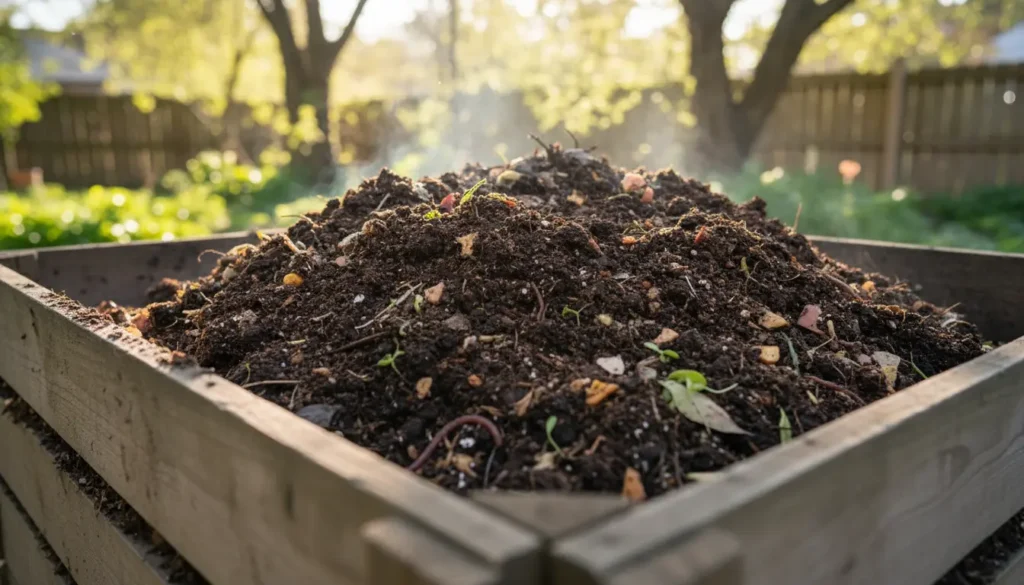
- Harvest finished compost: after 2–6 months you should see dark, crumbly compost ready for use.
Tips for Balance
- Target roughly 3 parts browns to 1 part greens by volume.
- Chop or shred materials to speed decomposition.
- Add a handful of garden soil when starting to introduce microbes.
Composting can reduce household waste by up to 30% and improve garden soil structure and water retention.
Troubleshooting Common Problems
Even beginners run into issues. Here are quick fixes for common compost problems.
Bad Odor
Cause: too much wet green material or poor aeration. Fix: add dry browns, turn the pile, and check drainage.
Pests or Rodents
Cause: meat, dairy, or exposed food scraps. Fix: remove attractants, switch to a closed bin, bury food scraps under browns.
Slow Decomposition
Cause: pile too dry, too many browns, or lack of surface area. Fix: add water, increase greens, and chop materials smaller.
Using Finished Compost
Finished compost is dark and crumbly with an earthy smell. Use it to enrich garden beds, topdress lawns, or mix into potting soil.
A little goes a long way: apply a 1-2 inch layer to garden soil and work it in, or mix 10–30% compost into potting mixes.
Small Real-World Example: Case Study
Case Study: Anna, a two-person household in Austin, started home composting with a 55-gallon tumbler.
She added kitchen scraps and shredded leaves, turning the tumbler twice a week. Within four months she produced enough compost to enrich three raised beds.
Results: Anna reduced her kitchen waste by about 40% and noticed better moisture retention in her vegetable beds, requiring less frequent watering.
Quick Checklist for Composting for Beginners
- Choose a bin type: pile, bin, or tumbler.
- Gather browns and greens in balance.
- Keep the pile moist and aerated.
- Turn regularly for faster results.
- Use finished compost to enrich soil and reduce fertilizer needs.
Final Notes on Home Composting
Home composting for beginners is low-cost and scalable. Start small, learn from experience, and adjust your routine based on how the pile behaves.
With steady attention to balance, moisture, and aeration, you can produce useful compost in months and reduce household waste sustainably.