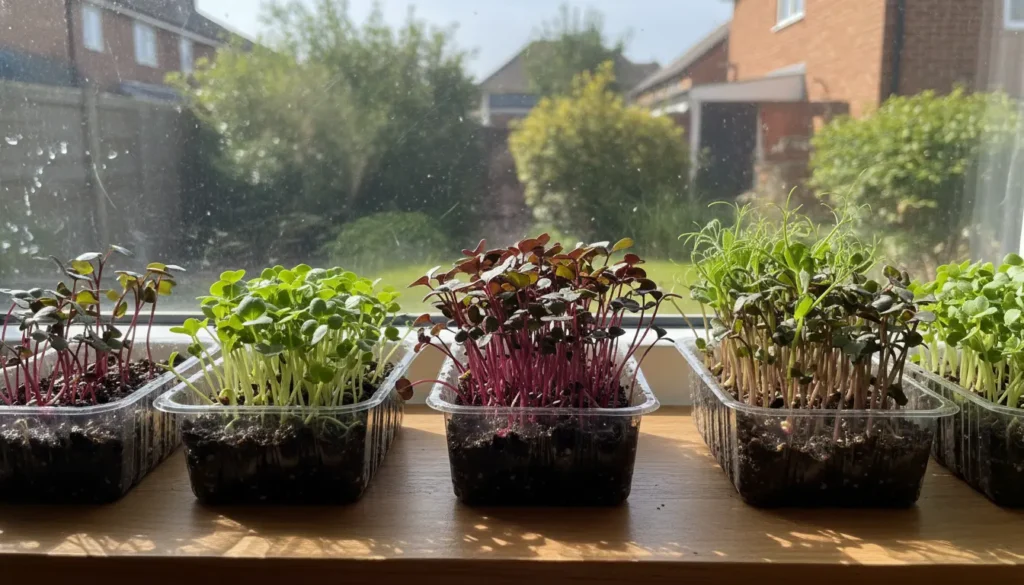
Microgreens are young vegetable and herb seedlings harvested just after the first leaves form. They are nutrient-dense, fast to grow, and ideal for small spaces like kitchen counters or windowsills.
Why Grow Microgreens at Home
Growing microgreens at home is practical for fresh flavor and nutrition year-round. They take 7 to 21 days to harvest, so you get a quick return compared to full-size vegetables.
What You Need to Grow Microgreens at Home
Start with a few basic supplies that fit on a small shelf or counter. Most items are inexpensive and reusable.
- Shallow growing trays or recycled containers with drainage
- Seed-starting mix or organic potting soil
- High-quality microgreen seeds (radish, sunflower, pea, broccoli, basil)
- Spray bottle for gentle watering
- Light source: bright window or LED grow light
- Kitchen scale or simple timer (optional)
Step-by-Step Guide to Grow Microgreens at Home
Follow these steps for consistent results. The guide uses typical timelines but expect slight variation by seed type and room conditions.
Preparing Trays for Microgreens
Clean the trays and add 1 to 1.5 inches of damp potting mix. Level the surface so water distributes evenly across the tray.
Sowing Seeds for Microgreens
Scatter seeds evenly to cover the surface without large gaps. For dense varieties like broccoli, aim for even coverage; for large seeds like sunflower or pea, leave more space.
Germination Stage
Lightly press seeds into the soil and mist with water. Cover with a clear lid or another tray to keep humidity high until most seeds sprout, usually 2 to 4 days.
Growing and Light for Microgreens
Once sprouts appear, remove the cover and move trays to a bright windowsill or under an LED grow light. Give 12 to 16 hours of light daily for compact, sturdy growth.
Watering Microgreens
Use a spray bottle or bottom-watering method to avoid displacing seeds. Water when the surface feels dry, typically once a day in warm indoor conditions.
Harvesting Microgreens
Harvest when the first true leaves appear, usually 7 to 21 days after sowing. Use scissors to cut stems just above the soil line. Rinse gently and pat dry before storage.
Storage
Store harvested microgreens in a single layer in a breathable container with a paper towel to absorb excess moisture. Use within 5 to 7 days for best flavor and texture.
Common Problems and Fixes for Microgreens
- Mold: Caused by poor airflow and overwatering. Fix by increasing ventilation, reducing humidity, and using a drier top layer in the soil.
- Leggy or Tall Microgreens: Caused by insufficient light. Move trays closer to a bright window or add a grow light.
- Poor Germination: Check seed viability and sowing depth. Some seeds benefit from a brief soak before sowing.
- Yellowing Leaves: Often a sign of nutrient deficiency or water stress. Ensure consistent moisture and use fresh, quality soil.
Quick Tips to Grow Microgreens at Home
- Label trays with seed type and sowing date to track growth cycles.
- Rotate trays daily if using a single light source to ensure even growth.
- Mix seed varieties for a flavor and texture blend at harvest.
- Reuse trays but sterilize between cycles to prevent disease buildup.
Microgreens can contain up to 40 times more vitamins and nutrients per gram than their mature counterparts, depending on the variety.
Small Real-World Example
Case study: A city renter named Maria used a 2-tier shelf on her balcony to grow microgreens. She started with radish and sunflower seeds and harvested twice a month.
Using a cheap LED strip and recycled baking trays, Maria cut grocery trips and added fresh greens to salads and sandwiches. Her yield covered a small household’s weekly needs and reduced food waste.
Seed Varieties and Recommendations
Choose beginner-friendly seeds for reliable results. Radish, broccoli, sunflower, and pea are forgiving and fast-growing.
- Radish: Quick, spicy flavor, harvest in 7 to 10 days.
- Broccoli: Mild flavor, high nutrients, harvest in 8 to 12 days.
- Sunflower: Nutty taste, thicker stems, harvest in 10 to 14 days.
- Pea: Sweet flavor, heartier texture, harvest in 10 to 14 days.
Conclusion
Growing microgreens at home is an efficient way to add fresh, nutrient-rich greens to your diet. With minimal equipment and a little routine, you can produce multiple harvests per month.
Start small, track your results, and adjust light and water to find the best routine for your space.