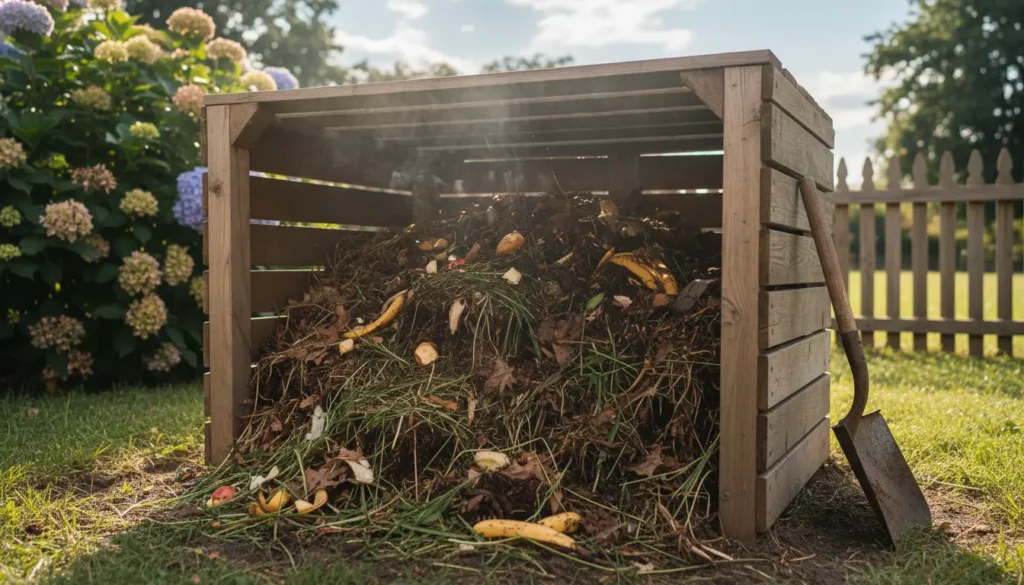
Home Composting for Beginners: What You Need to Know
Home composting turns kitchen and yard waste into nutrient-rich soil. It reduces trash, saves money, and improves garden health.
This guide gives practical, step-by-step instructions for beginners. Follow these steps to set up and maintain a reliable compost system at home.
Choose the Right Compost Bin for Home Composting
Selecting a suitable bin is the first practical decision. Options include tumblers, open bins, and worm composters.
Consider these factors when choosing a bin:
- Space available: balcony, small yard, or garden corner
- Volume of kitchen and yard waste you produce
- Ease of turning and harvesting finished compost
Bin Examples
- Tumbler: Good for quick aeration and faster decomposition.
- Stationary bin: Low cost and simple to build from pallets or wire.
- Worm composter (vermicompost): Ideal for small indoor kitchens and food scraps.
How to Start a Compost Bin
Begin with a proper mix of materials and basic setup. A balanced pile decomposes faster and smells less.
Balance Greens and Browns
Greens provide nitrogen; browns provide carbon. Aim for roughly a 2:1 or 3:1 ratio by volume of browns to greens.
- Greens: fruit and vegetable scraps, coffee grounds, fresh grass clippings.
- Browns: dry leaves, shredded paper, cardboard, wood chips.
Layering and Moisture
Start with a layer of coarse browns to improve airflow. Add alternating layers of greens and browns.
Keep the pile as moist as a wrung-out sponge. Too dry slows decomposition; too wet causes odor.
Maintaining Your Home Composting System
Maintenance keeps decomposition steady and prevents issues. Spend a few minutes a week managing the pile.
Turning and Aeration
Turning introduces oxygen to support aerobic decomposition. Turn a bin every 1–2 weeks for faster results.
If using a tumbler, rotate it several times each week. For stationary piles, use a pitchfork to mix layers.
Temperature and Time
A well-managed pile heats to 120–160°F (50–70°C), which speeds breakdown and kills pathogens and seeds.
Composting time varies: hot composting can produce usable compost in 2–3 months. Cold composting may take 6–12 months.
Troubleshooting Common Problems in Home Composting
Even beginners can solve common issues quickly. Check these simple fixes before abandoning the pile.
Bad Odors
Cause: Excess moisture or too many greens. Fix: Add more brown materials and turn the pile to add air.
Pests
Cause: Exposed food scraps or meat and dairy in the pile. Fix: Avoid meat and dairy, bury food scraps under browns, and use a closed bin or rodent-proof container.
Pile Too Dry or Too Slow
Cause: Lack of moisture or insufficient nitrogen. Fix: Add water and fresh greens like food scraps or grass clippings.
Composting can reduce household waste by up to 30 percent. Finished compost can improve soil structure, water retention, and nutrient content for plants.
Using Finished Compost
Finished compost looks dark, crumbly, and smells earthy. It is ready when original materials are no longer recognizable.
- Mix into garden beds to improve soil fertility and structure.
- Top-dress lawns or use as potting mix amendment for container plants.
- Use as mulch around shrubs to reduce moisture loss and suppress weeds.
Small Real-World Case Study
Case: A small urban household of two started a 60‑liter tumbler and a worm bin for kitchen scraps.
Result: After six months they reduced weekly trash volume by 40 percent and produced enough compost to feed two balcony vegetable containers.
Key actions: Regular turning, careful balance of greens and browns, and avoiding meat scraps prevented odors and pests.
Practical Tips and Quick Checklist for Home Composting
- Choose a bin that fits your space and waste volume.
- Keep a 2–3:1 ratio of browns to greens by volume.
- Maintain moisture like a wrung-out sponge.
- Turn the pile regularly for aeration.
- Avoid meat, dairy, diseased plants, and pet waste.
- Use finished compost in garden beds, containers, or as mulch.
Final Notes on Home Composting for Beginners
Start small and build confidence. Composting is forgiving, and mistakes are learning opportunities.
With basic attention to materials, moisture, and aeration, you can create high-quality compost that benefits your garden and reduces waste.