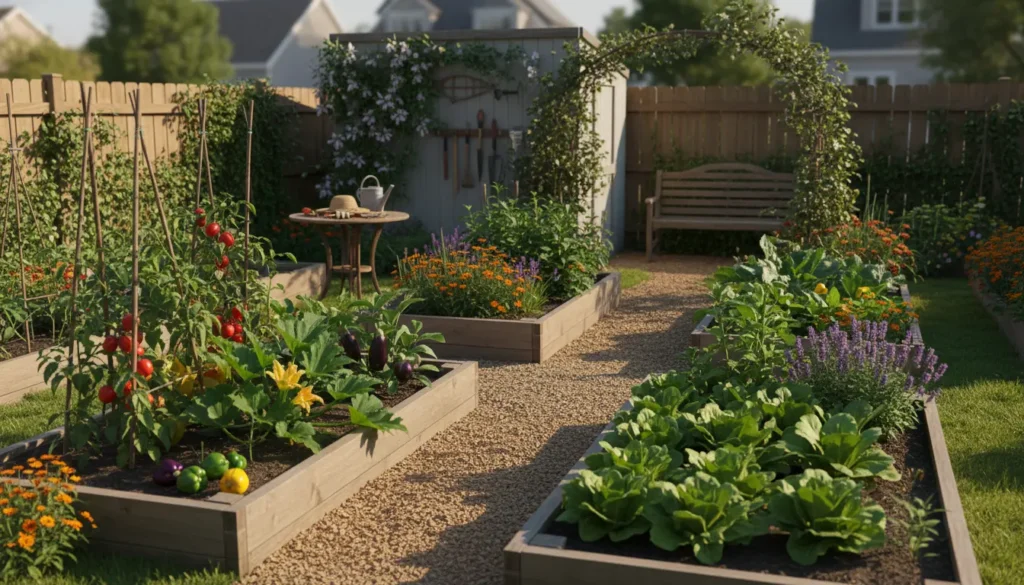
Why start a vegetable garden
Growing your own vegetables saves money and gives you fresher produce. A small, well-planned garden can yield meaningful harvests even if you have limited space.
This guide explains how to start a vegetable garden using straightforward, practical steps you can follow in a weekend or over a season.
How to Start a Vegetable Garden: Plan Before You Plant
Planning reduces mistakes. Begin by choosing the right location, deciding which vegetables you want, and mapping out how much space you need.
Choosing the location for your vegetable garden
Vegetables need sunlight, water access, and reasonable drainage. Pick a spot that gets at least 6 hours of direct sun per day and is near a water source.
Avoid low spots that collect cold air or water. If you lack sun, consider containers or a raised bed that can be positioned to get maximum light.
Decide what to grow
Start with easy crops that suit your climate and space. Recommended beginner vegetables include tomatoes, lettuce, radishes, beans, and zucchini.
Consider these factors when choosing crops:
- Season and frost dates for your area
- How much time you can commit to care
- Whether you prefer quick returns (lettuce, radish) or longer crops (tomatoes, peppers)
Soil Preparation for a Successful Vegetable Garden
Healthy soil is the foundation of a productive garden. Test, amend, and prepare your soil before planting to avoid problems later.
Test soil and improve quality
Use a basic soil test kit to check pH and nutrient levels. Most vegetables prefer slightly acidic to neutral soil (pH 6.0 to 7.0).
If your soil is heavy clay or low in organic matter, add compost and coarse sand or aged manure to improve texture and fertility.
Build raised beds or improve in-ground soil
Raised beds warm faster in spring and drain better. They are ideal if your ground soil is poor.
If using in-ground beds, loosen soil to a depth of 8 to 12 inches and mix in 2 to 4 inches of compost.
Planting: Timing and Techniques
Planting at the right time and with proper spacing improves yields and reduces disease risk. Follow seed packet dates and local frost schedules.
Start from seed or transplants
Seeds are cheaper and work well for fast growers like peas and carrots. Transplants are easier for slow starters like tomatoes and peppers.
Harden off seedlings by gradually exposing them to outdoor conditions for one week before planting.
Spacing and arrangement
Follow spacing recommendations on seed packets or plant tags. Crowded plants compete for light and nutrients and are more prone to pests.
Use companion planting basics: pair tall plants to the north and trailing plants to the south to avoid shading smaller crops.
Watering and Ongoing Care for Your Vegetable Garden
Regular care keeps plants productive. Focus on consistent watering, mulching, and routine checks for pests and diseases.
Water wisely
Water at the base of plants in the morning to reduce evaporation and leaf disease. Aim for deep, infrequent watering so roots grow deeper.
Use soaker hoses or drip irrigation to save water and deliver moisture efficiently.
Mulch and feed
Mulch with straw, wood chips, or shredded leaves to retain moisture, suppress weeds, and moderate soil temperature.
Side-dress with compost or a balanced organic fertilizer mid-season for heavy-feeding crops like tomatoes and squash.
Pest and Disease Management
Preventive practices work better than reactive measures. Healthy plants and good hygiene reduce most problems.
Practical pest control steps
- Rotate crops to different beds each year
- Remove and compost diseased plant material
- Handpick larger pests and use row covers for early protection
Introduce beneficial insects like ladybugs for aphid control and encourage birds with a nearby water source.
Planting marigolds near tomatoes can reduce root knot nematodes and deter some insects naturally.
Harvesting and Seasonal Care
Harvesting at the right time ensures the best flavor and encourages continued production. Check daily as fruits ripen quickly in warm weather.
After harvest, clean beds and add compost to replenish nutrients. Plan fall cover crops like clover to improve soil for next season.
Small Real-World Example
Case study: A family in Portland used a 10×10 raised bed to start a vegetable garden. They planted determinate tomatoes, bush beans, lettuce, and a few herbs.
In the first season they got weekly salad harvests and a steady flow of beans. Composting kitchen scraps and using a drip hose reduced work to about 30 minutes three times a week.
Simple Checklist to Start a Vegetable Garden
- Choose sunny location near water
- Test and amend soil with compost
- Decide crops based on season and time
- Plant seeds or transplants with proper spacing
- Water deeply and mulch to retain moisture
- Monitor pests and rotate crops yearly
Final Tips to Grow Confidently
Start small and expand as you gain confidence. Keep a simple garden journal to record planting dates and what worked.
Local extension services and community garden groups are valuable resources for region-specific advice and troubleshooting.
Following these practical steps will help you start a vegetable garden that is manageable, productive, and rewarding. Keep expectations realistic and learn from each season to improve next year.