Why choose home composting
Home composting turns kitchen scraps and yard waste into nutrient-rich soil. It reduces landfill waste and improves garden health with minimal cost.
This guide explains simple, practical steps to start home composting whether you have a yard, balcony, or small apartment.
Choose the right method for home composting
Select a composting method that fits your space, schedule, and comfort level. Three common options work well for most homes.
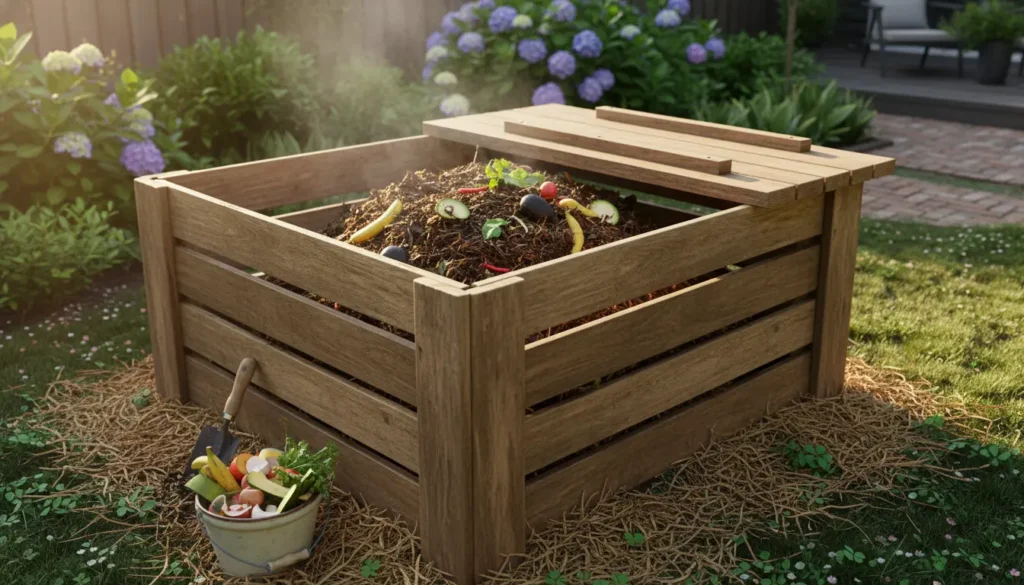
Backyard bin composting
Ideal for homes with outdoor space. Use a tumbling bin or a static bin. It handles larger volumes and warms up faster.
Bokashi or anaerobic composting
Good for limited outdoor space and people who want to compost cooked food and dairy. Requires a bokashi starter and airtight container.
Worm composting (vermicompost)
Works indoors or on a balcony. Red worms convert food waste into high-quality castings. It’s compact and fast for small households.
Materials to compost and avoid
Balance carbon-rich and nitrogen-rich materials for effective decomposition. Keep a simple checklist for daily sorting.
- Acceptable (greens/nitrogen): vegetable scraps, fruit peels, coffee grounds, tea bags.
- Acceptable (browns/carbon): dry leaves, shredded paper, cardboard, straw.
- Avoid: meat, bones, dairy (unless using bokashi), oils, diseased plant material, pet waste.
Simple setup steps for backyard bin composting
Follow these steps to start a balanced compost pile that decomposes efficiently.
- Place the bin: Choose a level, shady spot with good drainage.
- Layer materials: Start with coarse browns (twigs), then alternate greens and browns in 2–4 inch layers.
- Moisture: Aim for the dampness of a wrung-out sponge. Add water or dry materials to adjust.
- Turn: Mix the pile every 1–2 weeks to add oxygen and speed decomposition.
Managing moisture, aeration, and temperature
These three factors control how fast compost breaks down. Regular checks fix common problems early.
- Wet and smelly: Add more browns and turn to introduce air.
- Too dry: Add water and greens to rehydrate the pile.
- Cold pile: Add more greens and insulate with a thick layer of browns to raise temperature.
Troubleshooting common home composting problems
Most issues are simple to resolve if you check your pile weekly. Here are quick fixes.
- Fruit flies: Bury fresh scraps under a layer of brown material, or use a closed bin.
- Slow breakdown: Chop materials smaller and increase turning frequency.
- Pests: Avoid meat and pet waste; use a secure bin or bury scraps deeper.
How to tell when compost is ready
Finished compost is dark, crumbly, and smells earthy. Most backyard systems take 3–12 months depending on management.
Use finished compost as a soil amendment, mulch, or potting mix ingredient for healthier plants and reduced fertilizer needs.
Small case study: Apartment vermicomposting in Portland
Anna, a two-person household in Portland, started a worm bin on her balcony. She used a plastic bin with drainage, shredded paper as bedding, and red wigglers.
After six months she reduced her kitchen waste by 65% and produced enough castings to feed several potted herbs. Regular feeding and maintaining moisture were key to her success.
Practical tips for daily composting success
- Keep a small countertop scrap container with a lid to collect kitchen waste.
- Chop larger items to speed decomposition.
- Record your turning and moisture checks to learn what your system needs.
- Start small: scale up once you establish a routine that works.
Quick checklist to start home composting today
- Choose a method: backyard bin, worm bin, or bokashi.
- Gather supplies: bin, browns (leaves, cardboard), basic tools (pitchfork or aerator).
- Set up in a convenient location and begin layering materials.
- Monitor moisture and turn regularly. Adjust as needed.
Final thoughts on home composting
Home composting is a low-cost way to reduce waste and improve soil. Start with one simple method, keep consistent checks, and scale up as you gain confidence.
With basic care and attention, most households can convert kitchen and yard waste into valuable compost within months.