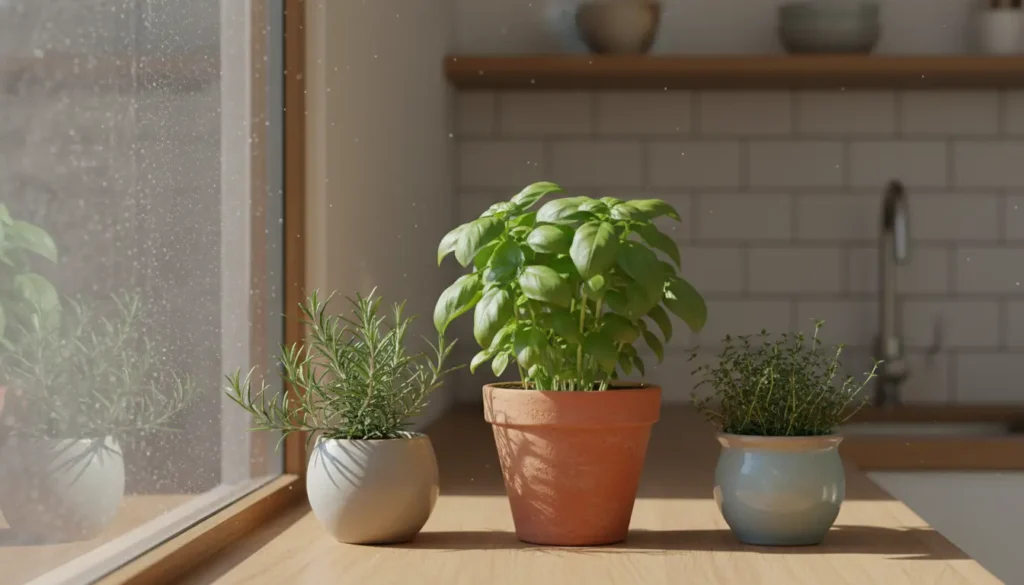
Growing an indoor herb garden is a practical way to have fresh flavors year-round. This guide explains what you need and how to set up a productive indoor herb garden with simple materials.
Planning Your Indoor Herb Garden
Start by selecting the location, herbs, and containers. A clear plan prevents common mistakes like overwatering or poor light.
Choose the Best Spot for an Indoor Herb Garden
Most herbs need bright, indirect light. South- or west-facing windows are ideal. If natural light is limited, plan to use a grow light.
Decide How Many Herbs to Grow
Begin with 3–6 herbs to keep care manageable. Consider herbs you use most in cooking to maximize value.
Lighting for an Indoor Herb Garden
Light is the single most important factor for herb growth. Without enough light, herbs become leggy and weak.
Natural Light Requirements
- Basil, rosemary, and thyme: 6–8 hours of bright light per day.
- Parsley and cilantro: Prefer bright, indirect light and tolerate slightly less direct sun.
- Mint: Tolerates lower light but grows best with moderate light.
Using Grow Lights for an Indoor Herb Garden
LED grow lights are energy efficient and effective. Position the light 6–12 inches above the foliage and run it 12–16 hours daily if natural light is insufficient.
Soil and Containers for an Indoor Herb Garden
Good soil and the right container make watering and root health easier to manage.
Best Soil Mix for an Indoor Herb Garden
Use a well-draining potting mix with perlite or coarse sand. Avoid garden soil which compacts in containers.
Choosing Containers
- Use pots with drainage holes to prevent root rot.
- Size matters: small herbs like thyme need 4–6 inch pots; basil does well in 6–8 inch pots.
- Saucers catch excess water but empty them after watering.
Watering and Fertilizing Your Indoor Herb Garden
Proper watering keeps herbs healthy without inviting disease. Fertilize lightly to avoid leggy growth.
Watering Routine for an Indoor Herb Garden
Check soil moisture before watering. Stick your finger 1 inch into the soil; water when the top inch is dry. Most herbs need watering once every 5–10 days depending on conditions.
Fertilizer Tips
Use a balanced liquid fertilizer at half strength every 4–6 weeks during active growth. Avoid heavy fertilization which reduces flavor intensity.
Pruning and Harvesting an Indoor Herb Garden
Regular pruning encourages bushier plants and continual harvests. Harvest leaves from the top to stimulate new growth.
Pruning Techniques for an Indoor Herb Garden
- Pinch back new shoots weekly to keep plants compact.
- Remove flower buds on basil to extend leaf production.
- Harvest no more than one-third of the plant at a time.
Troubleshooting Common Problems in an Indoor Herb Garden
Identify issues early to prevent crop loss. Common problems include yellowing leaves, leggy stems, and pests.
Quick Fixes
- Yellow leaves: Check for overwatering and improve drainage.
- Leggy growth: Increase light and pinch back stems.
- Pests: Wipe leaves with soapy water and isolate affected plants.
Small Real-World Case Study
Case: Sarah, a city apartment renter, started an indoor herb garden on a narrow windowsill. She chose basil, parsley, and mint in 6-inch pots and used a clip-on LED grow light.
Within six weeks she had consistent harvests of basil for pesto and parsley for weekly meals. She solved early leggy growth by moving the light closer and increasing pruning. Her upfront cost was about $70 for pots, soil, and a light; she now saves money on fresh herbs and reduces food waste.
Quick Checklist to Start an Indoor Herb Garden
- Pick a bright location or buy an LED grow light.
- Choose 3–6 herbs you use often.
- Buy well-draining potting mix and pots with drainage holes.
- Water when the top inch of soil is dry; avoid standing water.
- Prune regularly and fertilize lightly during the growing season.
Starting an indoor herb garden is low-risk and high-reward. With the right light, soil, and a simple routine, you can maintain fresh herbs year-round and enjoy better flavor in home cooking.