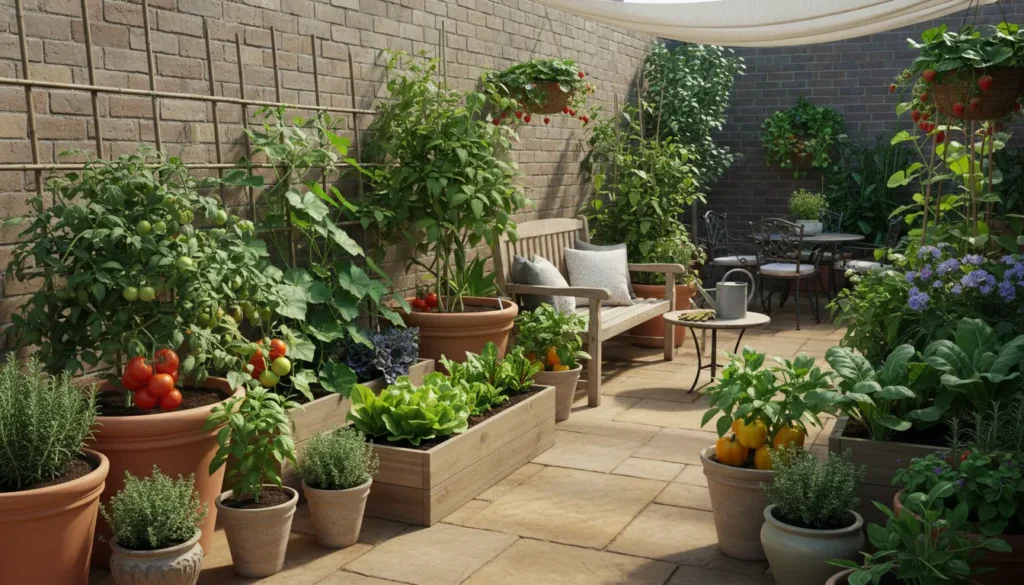
Starting a small vegetable garden is a manageable way to grow fresh produce at home. This guide focuses on practical steps you can follow whether you have a balcony, patio, or a small backyard plot.
Why Start a Small Vegetable Garden
A small vegetable garden saves space and reduces maintenance while still producing useful yields. It lowers grocery bills and gives better-tasting, fresher vegetables.
For beginners, small gardens simplify learning soil care, watering, and pest control without overwhelming time commitments.
Choose the Right Location for a Small Vegetable Garden
Sunlight and Access
Most vegetables need 6–8 hours of direct sun. Choose a spot with consistent sunlight and easy access to water.
Consider wind exposure and proximity to doors for convenience when harvesting and maintaining plants.
Space and Layout
Measure your available space and decide between containers, raised beds, or a small ground plot. Plan walkways to avoid compacting soil.
Use vertical space with trellises for beans, peas, and vining tomatoes to increase productivity in a small footprint.
Select Vegetables for a Small Vegetable Garden
Pick crops that match your climate, taste, and space. Prioritize high-yield, compact, or quick-growing varieties.
Some ideal choices for small gardens include:
- Leafy greens: lettuce, spinach, arugula
- Herbs: basil, parsley, chives
- Compact tomatoes and peppers
- Root crops: radishes, baby carrots
- Vining crops trained vertically: pole beans, cucumbers
Preparing Soil and Containers for a Small Vegetable Garden
Soil Mix and Amendments
Good soil is the foundation of a productive small vegetable garden. Use a loose, well-draining mix rich in organic matter.
Mix equal parts quality compost, topsoil, and coarse sand or perlite for containers. Amend ground soil with compost and a balanced granular fertilizer if needed.
Container and Raised Bed Options
Containers should be deep enough for the root systems of your selected crops. Most vegetables do well in 10–20 inch deep pots or grow bags.
Raised beds 6–12 inches high work well for shallow-rooted crops. Line the bottom with landscape fabric if drainage is a concern.
Planting, Watering, and Care for a Small Vegetable Garden
Seeding and Transplanting
Sow seeds at the depth listed on the packet and thin seedlings to recommended spacing to avoid crowding. Start slow with direct-sown crops like radish and lettuce for quick results.
Transplant nursery seedlings after hardening them off for a week. Plant at the same depth as in their pots unless instructed otherwise for specific crops.
Watering, Fertilizing, and Pest Control
Water consistently, aiming for deep, infrequent soaking rather than shallow daily watering. Use drip irrigation or soaker hoses to conserve water and reduce leaf wetness.
Fertilize based on plant needs: leafy crops need more nitrogen while fruiting crops need balanced N-P-K. Use organic controls and physical barriers for pests before chemical options.
Harvesting and Seasonal Management for a Small Vegetable Garden
Harvest frequently to encourage continued production, especially for greens and herbs. Pick ripe fruits promptly to prevent overripening and pests.
Rotate crops each season if possible and replenish soil with compost after heavy-feeding crops to maintain fertility.
Practical Tips and Examples
- Stagger planting every 2–3 weeks to extend harvests.
- Use companion planting like marigolds to deter pests or basil to improve tomato flavor.
- Record planting dates and results in a simple garden journal.
- Start small: 4–6 containers or a 4×4 foot bed is enough to learn fast.
Plants grown in containers often need more frequent feeding and watering than in-ground plants because containers dry out faster. Mulching containers with straw or shredded bark can reduce evaporation.
Short Case Study: Sarah’s 10-Square-Foot Patio Garden
Sarah transformed a shaded patio corner into a productive space using a 2×5 foot raised bed and three large containers. She chose cherry tomatoes, basil, lettuce, and pole beans trained on a simple trellis.
In her first season she harvested multiple lettuce pickings and several pints of tomatoes. Key actions were regular watering with a soaker hose, weekly compost tea feedings, and netting to protect from birds.
The small garden paid off with fresh salads all summer and a clear plan for crop rotation next year.
Conclusion: Growing Success in a Small Vegetable Garden
A small vegetable garden offers big rewards for little space. Focus on selecting the right site, preparing quality soil, and choosing compact crops to maximize results.
Start with a few easy plants, observe how they respond, and adjust care. Over time you can expand or refine your garden based on what works best for your space and schedule.
Ready to begin? Sketch your layout, pick three starter crops, and set a planting date this season.