Vegetable Gardening Basics
Vegetable gardening is a practical way to grow fresh food at home. This guide gives clear, step-by-step instructions for beginners.
Why start vegetable gardening
Growing vegetables saves money, improves nutrition, and offers a satisfying hobby. Even small spaces like balconies or patios can support productive plants.
Planning Your Vegetable Gardening Space
Good planning increases success. Start by assessing light, space, and your time commitment.
Choose a spot that gets at least 6 hours of direct sun for most vegetables. If sun is limited, pick crops that tolerate partial shade.
Essential site considerations for vegetable gardening
- Sun exposure: 6–8 hours ideal for tomatoes, peppers, and cucumbers.
- Soil drainage: Avoid areas where water pools after rain.
- Access to water: Place beds within reach of a hose or irrigation.
- Space: Plan bed sizes you can easily reach from both sides.
Soil and Fertility for Vegetable Gardening
Soil quality determines plant health. Most vegetables prefer loose, fertile soil with good drainage.
Test the soil pH if possible. Most vegetables thrive at pH 6.0–7.0. Amend soil with compost to improve structure and nutrients.
How to prepare soil
- Remove weeds and debris from the planting area.
- Work in 2–4 inches of mature compost per square foot for raised beds.
- For heavy clay, add coarse sand and organic matter to improve drainage.
- Mix in a balanced slow-release organic fertilizer if soil tests show low nutrients.
Choosing Vegetables for Beginners
Start with easy, forgiving crops that offer quick results. This keeps motivation high and builds experience.
- Lettuce and salad greens — fast-growing, harvestable in weeks.
- Radishes — sprout quickly and show success early.
- Tomatoes (determinate varieties) — productive in containers and beds.
- Zucchini and summer squash — high yield with minimal effort.
- Herbs like basil, parsley, and chives — useful and low-maintenance.
Planting and Care in Vegetable Gardening
Follow planting guides for each crop regarding spacing and depth. Overcrowding leads to disease and poor yields.
Water consistently. Most vegetables need about 1 inch of water per week, more in hot weather. Water at the soil level to keep foliage dry.
Mulch, staking, and pruning
- Mulch helps retain moisture and suppress weeds; use straw, shredded leaves, or bark chips.
- Stake tall plants like tomatoes and pole beans to save space and reduce disease.
- Prune only when needed to improve air circulation and focus energy on fruiting.
Pest and Disease Management for Vegetable Gardening
Prevent problems with good hygiene and plant selection. Early intervention keeps losses small.
Use these practical strategies:
- Rotate crops yearly to reduce soil-borne diseases.
- Inspect plants weekly and remove damaged leaves.
- Encourage beneficial insects like ladybugs and lacewings by planting flowers.
- Use row covers to protect seedlings from insects without chemicals.
Harvesting and Storage
Harvest regularly to encourage more production. Pick vegetables at peak ripeness for best flavor and nutrition.
Store produce properly: cool and dry for most vegetables, or blanch and freeze surplus to preserve harvest.
Small Case Study: Backyard Success
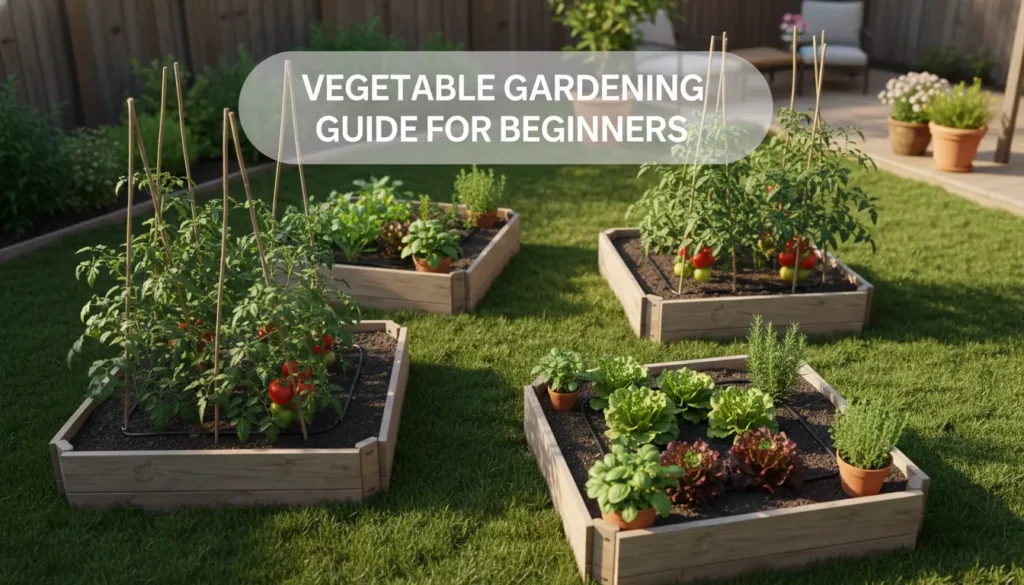
Case: Maria converted a 10×6 ft patch in her backyard into raised beds. She prepared soil with compost, planted tomatoes, lettuce, and beans, and used a simple drip hose for watering.
Result: In the first season she harvested 12 pounds of tomatoes and continuous salad greens. Routine pruning and weekly inspections kept pests low and taste high.
Many common vegetables can be regrown from kitchen scraps. For example, green onion roots and lettuce bases will sprout new growth when placed in water or soil.
Quick Vegetable Gardening Checklist
- Choose a sunny site and test soil pH.
- Build or prepare beds with compost and good drainage.
- Select easy crops and follow spacing guides.
- Water consistently and mulch to conserve moisture.
- Monitor for pests and rotate crops each year.
Final Tips for Successful Vegetable Gardening
Start small and expand as you gain confidence. Keeping a gardening journal helps track what works in your microclimate.
Join local gardening groups or online forums to share experiences and troubleshoot specific problems. Practical, steady care yields the best results.