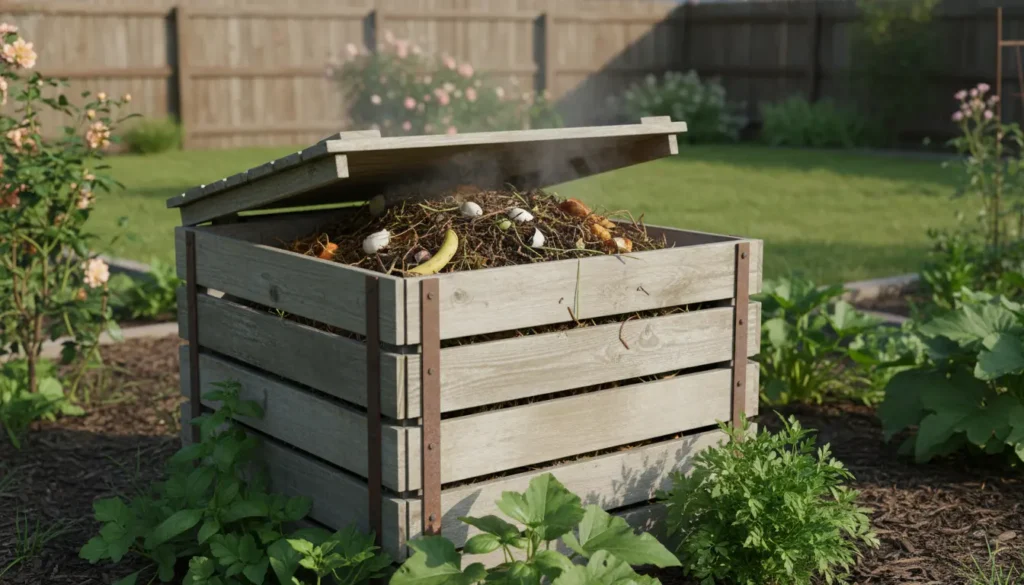
Home composting turns kitchen scraps and yard waste into rich soil amendment. It reduces trash, improves garden health, and saves money on fertilizers.
Why Home Composting Matters
Composting reduces landfill waste and lowers greenhouse gas emissions by keeping organic matter out of trash. It also returns nutrients to soil, improving plant growth and water retention.
Starting a compost system at home requires only a small commitment of time and a basic understanding of the process. With that, most households can manage a practical compost setup.
Basic Principles of Home Composting
Successful composting relies on three simple elements: materials, microbes, and conditions. Materials provide carbon and nitrogen, microbes break matter down, and conditions control the speed of decomposition.
Balance Browns and Greens for Home Composting
Brown materials are high in carbon; green materials are high in nitrogen. A good mix feeds microbes and prevents odors. Aim for approximately 3 parts browns to 1 part greens by volume.
- Examples of browns: dry leaves, shredded paper, straw.
- Examples of greens: vegetable scraps, coffee grounds, fresh grass clippings.
Aeration and Moisture in Home Composting
Material must be moist but not soggy and should receive air regularly. Aeration supports aerobic microbes that prevent foul smells.
Turn the pile every 1–2 weeks or use a tumbler to mix contents. If material smells, add browns and increase turning frequency.
Step-by-Step Home Composting Guide
Follow these practical steps to build a stable compost pile or bin. Each step is brief and actionable for beginners.
- Choose a bin or spot: Select a well-drained area or a dedicated compost bin. Tumblers, stationary bins, or simple piles all work.
- Layer materials: Start with coarse browns for drainage then alternate greens and browns. Keep layers thin to improve aeration.
- Monitor moisture: The pile should feel like a wrung-out sponge. Add water when dry and cover to protect from heavy rain.
- Turn regularly: Mix the pile every 1–2 weeks to introduce air and speed decomposition.
- Watch the temperature: A healthy pile will warm during active decomposition. Temperatures between 110–160°F (43–71°C) indicate active breakdown for hot composting.
- Cure the compost: Once active decomposition slows, let the pile sit for a month to stabilize and cool before use.
- Use the finished compost: Apply as a top dressing, mix into potting soil, or incorporate into garden beds.
Troubleshooting Home Composting Problems
Common issues are easy to fix with small adjustments. Identify the problem, then change one factor at a time.
- Bad odors: Too much green or poor aeration. Add browns, turn pile, and check moisture.
- Pile too dry: Add water and more greens or damp browns; cover to retain moisture.
- No heat or slow breakdown: Pile may be too small or lacking nitrogen. Increase pile size, add greens, and turn to encourage microbes.
- Pests or rodents: Avoid adding meat, dairy, or oily foods. Use a closed bin or bury food scraps in the center of the pile.
Home Composting Tools and Materials
You do not need fancy tools to compost, but a few basic items make the process easier. Collect simple, inexpensive supplies to keep the system efficient.
- Compost bin or tumbler
- Pitchfork or garden fork for turning
- Kitchen scrap container with lid
- Shredder or scissors for breaking down large pieces
- Optional: compost thermometer
Small Real-World Example: Case Study
Emma, a city renter, used a 65-liter tumbler on a small balcony to manage kitchen waste. She added shredded newspaper as browns and kitchen scraps as greens, turning the tumbler twice a week.
Within six months Emma produced enough finished compost to feed two large potted herbs and reduce her kitchen trash by nearly half. The system required 10–15 minutes weekly of maintenance.
Practical Tips to Keep Home Composting Simple
Consistency matters more than perfection. Keep a small kitchen caddy and empty it regularly into the outdoor bin.
Start small and scale the system once you’re comfortable with turning, moisture control, and material balance.
Home composting is a practical step toward waste reduction and healthier soil. By following the basic balance of browns and greens, maintaining moisture and aeration, and addressing issues promptly, even beginners can produce quality compost year-round.